The Tzer Island book blog features book reviews written by TChris, the blog's founder.  I hope the blog will help readers discover good books and avoid bad books.  I am a reader, not a book publicist.  This blog does not exist to promote particular books, authors, or publishers.  I therefore do not participate in "virtual book tours" or conduct author interviews.  You will find no contests or giveaways here.

The blog's nonexclusive focus is on literary/mainstream fiction, thriller/crime/spy novels, and science fiction.  While the reviews cover books old and new, in and out of print, the blog does try to direct attention to books that have been recently published.  Reviews of new (or newly reprinted) books generally appear every Monday, Wednesday, and Friday.  Reviews of older books appear on occasional weekends.  Readers are invited and encouraged to comment.  See About Tzer Island for more information about this blog, its categorization of reviews, and its rating system.

Entries in horror (40)

Friday
Mar302018

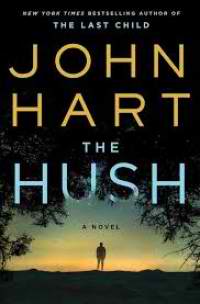
The Hush by John Hart

Published by St. Martin's Press on February 27, 2018

The Hush is a sequel to The Last Child, which I haven’t read. As I understand it, The Last Child is a straightforward suspense novel that deals with Johnny Merrimon’s search for his missing twin sister. The Hush returns Johnny as a central character, but the novel blends suspense with horror and the supernatural. It’s kind of a haunted woods story, although the woods are swampy which makes them even more foreboding. The supernatural slant will upset readers who think a sequel should be just like the novel it follows. I admire John Hart for changing up his game (there’s not much point in writing a sequel if you’re just going to rewrite the last book), but readers who can’t abide horror novels will likely be disappointed. In any event, the novel stands alone, and I don’t have the sense that I missed anything in The Hush by not reading The Last Child first.

Johnny lives alone in Hush Arbor, with no electricity or phone or running water, and no desire to leave. He inherited six thousand acres in North Carolina and is fighting to keep it. Sometimes he finds himself in the swamp in the middle of the night and has no recollection of walking there. The swamp was once thought to be haunted by slaves who were hung from its trees, as we learn in a flashback involving a young boy who made the mistake of hunting there in 1931.

Johnny drives to town once a month but prefers his own company. His father is dead. He avoids his mother and her new husband, a police detective named Clyde Hunt who apparently played a significant role in The Last Child. Johnny is trying to forget the past, but he knows he is forgetting how to live a normal life.

Johnny’s best friend, Jack Cross, is a new lawyer, having overcome a difficult childhood. Jack seems to be the only person who notices that Johnny is changing in ways that cannot be explained by isolation alone. His senses are abnormally heightened. His wounds heal with impossible speed. He is acutely aware of everything that happens in the woods and water, whether it involves animals, fish, humans, or trees. As the only person who visits Johnny, Jack senses the presence of something evil in the swamp and worries that it is affecting Johnny.

Johnny needs an appellate lawyer to save his land, but can’t afford one. Jack introduces him to an appellate lawyer in his firm who might represent him pro bono, for reasons that only she understands. Some of those reasons have to do with the arousal she feels when she thinks about Johnny, a sensation that multiplies when she meets him in person.

A grizzly death in the woods leads to a murder accusation, but the murder clearly couldn’t have been committed by one individual — a fact that doesn’t deter the sheriff from accusing Johnny. The murder provides the reader’s first inkling that The Hush is a horror novel. More deaths follow, as do a series of gruesome events with supernatural origins that are closely connected to the Hush, the Merrimon family, and North Carolina’s evil history as a slave state.

All of the secondary characters are created with an abundance of detail, including a rich hunter named Boyd who wants to buy Johnny’s land, a young woman named Cree who dreams (as Johnny does) about bloody events from the past, Cree’s mother who is trying to take Johnny’s land, a fellow named Leon who operates a ramshackle tavern/restaurant at the outskirts of the Hush, and the seemingly crazy old woman who raised Leon and who is the only person capable of understanding the dreams that trouble Johnny and Cree.

I don’t read many horror novels, but I enjoy them when the author creates an environment that is truly creepy. Hart does that in The Hush. As a place, the Hush is such a carefully rendered world that I set aside my skepticism about the supernatural and became absorbed in the story’s convincing detail. But The Hush is also the story of Johnny’s internal struggle — an eternal struggle between good and evil, when good and evil are not easily distinguished — and of his loyal friendship with Jack. Hart’s believable characters and settings, combined with a plot that is chilling and suspenseful, makes The Hush one of the best horror novels I’ve read in recent years.

RECOMMENDED
Monday
May222017

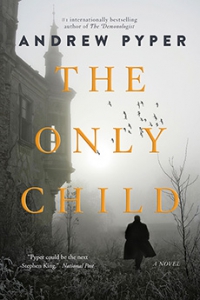
The Only Child by Andrew Pyper

Published by Simon & Schuster on May 23, 2017

The Only Child is a horror novel, but it’s not the horror novel I expected. Is it a vampire novel? Not really, because the vampire genre has devolved into a branch of romance fiction thanks to Twilight and its trashy imposters. There’s only a bit of romantic blood lust in The Only Child, although the protagonist, a fellow named Michael, once wooed Mary Shelley.

Michael is a monster, a blend of Dracula and Frankenstein and Mr. Hyde, who has a taste for blood and nineteenth century horror writers. Give Andrew Pyper credit for drawing on the classics for inspiration.

Michael says he was created to be the prototype of a perfect soldier. Those plans never turn out quite as the mad scientist expects. But whether Michael is telling the truth about his origins is not entirely clear.

What is clear, perhaps, is that Lily Dominick is his daughter. And that Lily’s mother was torn apart by a bear when Lily was six. Except it might not have been a bear. And while Lily’s memories of that day might not be entirely reliable (did she really ride away from the crime scene on a white horse?), it doesn’t take much to convince her that she is a monster’s daughter.

Lily is now a forensic psychiatrist who assesses the mental health of individuals who, more often than not, have committed horrible crimes. The story begins with a man who tore the ears off a stranger so that he would be evaluated by Lily. At least, that’s what he tells her. The man is Michael, who claims to be over two hundred years old.

Michael manipulates Lily in ways that lead her to Eastern Europe and a variety of threatening encounters. Lily wants to learn the truth about the man, about her mother, and perhaps about herself, but separating truth from deception is difficult. The eventual question for Lily is whether she should make an alliance with Michael or with the people who are trying to kill him. It’s a tough question.

Pyper is an excellent storyteller and The Only Child is a truly creepy work of fiction. The plot moves in unexpected directions and the characters are so enigmatic that it’s impossible to decide who to like or dislike until the very end. In fact, the ending redefines the reader’s view of key characters. The Only Child is a well-crafted, surprising novel that plays with the traditions of horror fiction and manages to add something new.

RECOMMENDED

Monday
May152017

Full Wolf Moon by Lincoln Child

Published by Doubleday on May 16, 2017

Fiction like the Jeremy Logan series demands (as do many horror stories) a willingness to suspend disbelief for the sake of being creeped out. Still, Lincoln Child never pushes the boundaries so much that an open-minded reader will become unwilling to accept the scenarios he creates. Child always makes events seem as if they could happen, even if they couldn’t.

Historian and paranormal investigator (“enigmalogist”) Jeremy Logan is asked to investigate the deaths of two hikers in the Adirondacks, where Logan happens to be staying. The unfortunate hikers were “savagely mauled to death” under a full moon at different times in roughly the same location. A killer who lives in the area after his release from a mental health commitment becomes a convenient suspect as new killings occur, but the reader knows that ordinary killers can’t tear people apart.

After a bit of investigation, Logan learns that the community considers the Blakeney clan, an inbred family of backwoods lunatics, to be a more likely culprit than a rogue bear. But are the Blakeneys just garden variety crazy, or are they werewolves? Rumors abound.

Of course, werewolves come out when there’s a full moon, and a scientist in Full Wolf Moon who happens to be studying the effect of the moon on small critters posits a reasonable theory as to why that could be true. At least it’s reasonable in the context of thrillers and horror fiction, which means it might be malarkey, but it sounds plausible. That’s really all the reader can ask in a story about a possible werewolf.

Child evokes some genuine emotion during the course of the story. Secondary characters have enough depth that the reader will care when they encounter misfortune. The book isn’t particularly frightening, but it creates a nice atmosphere of "things that go bump in the woods."

The story moves quickly and it’s entertaining, although the resolution is less surprising than Child must have intended. Full Wolf Moon is certainly better than most of the vampire stories, and nearly all of the zombie stories, that have flooded the market in recent years, making this werewolf story a good choice for horror readers who want to expand the range of monsters that keep them awake at night.

RECOMMENDED

Sunday
Feb212016

Wylding Hall by Elizabeth Hand

Published digitally by Open Road Media on July 14, 2015

Wylding Hall is sort of a gentle horror story, if that’s possible. What kind of horror? Demons? Ghosts? Witches? Monsters? All I will say is that this is neither a zombie novel nor a “space aliens who look like lizards” novel. Which is fine because the world has too many of those already.

Wylding Hall combines a supernatural/horror novel with a band story. The band (Windhollow Faire) became famous after their Wylding Hall album but it was once a bunch of kids playing folk songs in London pubs for fun. We learn early on from Lesley, the American singer who joined the band as Arianna’s replacement, that Arianna, after being replaced, fell to her death from guitar player Julian’s window. The producer decided the band should recover from her death by spending the summer in the country recording their second album at Wylding Hall, an old Tudor full of strange rooms, surrounded by spooky woods. In retrospect, it is one of the most influential albums in the history of progressive folk, or so the producer claims.

The novel is told in the form of a documentary. Band members, the producer, and occasional outsiders talk to a documentarian about the summer that the Wylding Hall album was made (and, to a lesser extent, about the backgrounds of the band members).

During the first half of Wylding Hall, characters mention, without actually describing, an event that occurred during the band’s stay. They also make references to dead birds, the disembodied voice of a child singing, an occasional apparition, warnings from a local farmer to stay out of the woods, and other foreshadowing of a horror to come. But most of the time, the characters are talking about themselves, their relationships, and the process of making music. It is in the second half that something unexpected and unexplained occurs.

I called this a gentle horror novel because no people are torn to shreds, or turned inside out, or have their blood sucked out. If violence is what you want, Wylding Hall will probably bore you. If you’re looking for a good band story, the kind of story that allows relationships to develop among people who are forced by circumstances to spend a lot of time together, you’ll probably like Wylding Hall. I don’t know that the supernatural element adds much -- it isn’t particularly frightening -- but it does provide the glue that holds the story together.

RECOMMENDED

Friday
Jan152016

Slade House by David Mitchell

Published by Random House on October 27, 2015

Too many horror novels are horribly dull. Moreover, horror fiction that isn’t well written (e.g., most vampire novels) can be excruciatingly awful. Slade House suffers from none of those faults. It is engaging, surprising, smart, and by the end, quite creepy.

Strange things happen in Slade Alley. A mansion, hidden on the other side of a small doorway in the middle of the alley, is difficult to find, perhaps because most of the time it isn’t there. The mansion is Slade House.

In the first of the novel’s five segments, Nathan Bishop’s mother takes him to Slade House. There he meets Norah Grayer and plays games with a kid who turns into a vicious dog -- unless Nathan imagined the whole thing. In the second segment, DI Gordon Edmonds (a lazy, racist representative of the Thames Valley Police), meets the mansion’s owner, Chloe Chetwynd, after traveling to Slade Alley to investigate a tip concerning the Bishops’ disappearance nine years earlier. Chloe denies any knowledge of Norah, leading the reader to wonder whether she is being deceitful, whether multiple mansions are hidden in Slade Alley, or whether there is some other answer to the mystery.

We learn something of what’s going on at the end of the second segment, before we move forward another nine years. This time a group of college kids decide to investigate the mysterious disappearances that seem to occur in Slade Alley every nine years. The segment is narrated by Sally Timms, whose sister, a journalist, turns up in the fourth segment.

The book’s structure makes the first four segments come across as linked short stories, each with its own cast of characters. Tying all the segments together is Fred Pink, who knows something about Slade House but, since he appears to be a raving lunatic, cannot get anyone to listen. The final segment again features a new character, but that segment twists the story in the direction of a satisfying conclusion.

Horror is a traditional vehicle for exploring themes of good versus evil. Slade House defines evil as the belief that it is fine to improve or extend one’s own life by taking the lives of others, a belief that is expressed in slogans like “might makes right,” uttered by “those who voluntarily amputate their consciences.” There is evil aplenty for the reader to enjoy in Slade House. The imaginative story, told in praiseworthy prose, is more often fun than frightening, but its best moments are at least mildly chilling.

RECOMMENDED

Page 1 ... 3 4 5 6 7 ... 8 Next 5 Entries »