The Tzer Island book blog features book reviews written by TChris, the blog's founder.  I hope the blog will help readers discover good books and avoid bad books.  I am a reader, not a book publicist.  This blog does not exist to promote particular books, authors, or publishers.  I therefore do not participate in "virtual book tours" or conduct author interviews.  You will find no contests or giveaways here.

The blog's nonexclusive focus is on literary/mainstream fiction, thriller/crime/spy novels, and science fiction.  While the reviews cover books old and new, in and out of print, the blog does try to direct attention to books that have been recently published.  Reviews of new (or newly reprinted) books generally appear every Monday, Wednesday, and Friday.  Reviews of older books appear on occasional weekends.  Readers are invited and encouraged to comment.  See About Tzer Island for more information about this blog, its categorization of reviews, and its rating system.

Entries in James S.A. Corey (7)

Wednesday
Jun272012

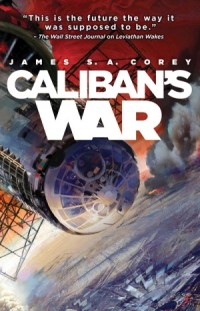
Caliban's War by James S.A. Corey

Published by Orbit on June 26, 2012 

Sometimes the second book in a series is a let-down, particularly when it follows a strong initial entry. The good news is that Caliban's War advances the story that Leviathan Wakes began, introduces appealing new characters, adds depth to a familiar character, and reconfirms the authors' ability to tell an energetic, engrossing tale.

Ganymede has been in crisis since Marines from Earth and Mars started shooting at each other. But how did the hostility begin? Only Gunnery Sergeant Bobbie Draper knows the truth: they weren't shooting at each other, but at the monster that was killing them. Since the "monster" could be the protomolecule last seen on Venus in Leviathan Wakes, the Outer Planets Alliance sends James Holden and the crew of the Rocinante to investigate.

Meanwhile, Prax Meng is upset because his daughter Mei was apparently kidnapped during the fighting. Mei has a genetic disorder that puts her at risk of death if she doesn't receive regular treatment. Is there a connection between the snatch and the coincidental timing of the monster's attack? It's up to Holden and his crew to find out.

A third storyline involves Chrisjen Avasarala, an elderly, foul-mouthed UN official whose job is to keep the peace between Earth and Mars, a none-too-easy task. Her story eventually merges with Draper's and becomes one of political intrigue.

I wouldn't recommend reading Caliban's War without first reading Leviathan Wakes. Caliban's War assumes a familiarity with the events that took place in the first novel. While Caliban's War doesn't have quite the same poignant human drama as Leviathan Wakes -- largely due to the absence of Miller, a memorable character who was central to the story in the first novel -- it does replicate the fun factor: engaging characters, low-key humor, and exciting action. Yet there is enough human drama, enough genuine emotion, in Caliban's War to fuel the reader's compulsion to move on to the next chapter ... and the next, and the next.

Many of the characters draw upon familiar stereotypes but that, at least, gives them the benefit of well-defined personalities. In any event, there is a complexity to Holden that rises above the stereotypical. Holden confronts a range of internal conflicts and fears in Caliban's War while proving to himself that he's capable of growth. Holden is an idealist who needs to learn something about pragmatism, but he's also a fundamentally peaceful guy who is morphing into something else after all the horror he's experienced.

Holden is fond of taking his message directly to the people via a futuristic version of the internet. The theme of using direct communication to bypass the government and take control of destiny plays a large part in Caliban's War, just as it did in Leviathan Wakes. That theme is expanded with the addition of Avasarala, who proves to be an adept manipulator of the media.

Caliban's War isn't for science fiction fans who like their novels to reflect world-building or carefully considered technological advances or imagined applications of theoretical physics. Caliban's War is quite the opposite. The writing team known as James S.A. Corey cares more about story-building and character-building than world-building. The result is an absorbing story about memorable characters that some fans will regard as too light-on-science to be taken seriously. Yet not all novels need to be taken seriously; some work on a more elemental, less intellectual level. I don't need to be convinced that "this could really happen" to appreciate the entertainment value of a science fiction novel, but others do, and this might be the right novel for them.

RECOMMENDED
Monday
Jun132011

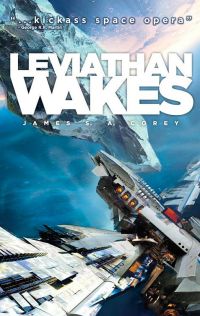
Leviathan Wakes by James S.A. Corey

Published by Orbit on June 15, 2011

The Canterbury, an ice-hauling ship, receives a distress signal from the Scopuli, a deserted ship with a hole in the hull and a transmitter that sends a signal as soon as the ship is boarded. Soon the Canterbury is attacked and destroyed by a frigate that appears to be part of the Martian Navy. Only the shuttle crew that boarded the Scopuli survives, including XO Jim Holden. When Holden broadcasts the details of the attack, the news nearly ignites a war between residents of the Belt (represented by the Outer Planets Alliance) and those of Mars. Holden's story, told in the odd-numbered chapters, unfolds from there.

The story told in the even-numbered chapters belongs to Miller, a security officer (essentially a corporate cop) on Ceres, a Belt gateway. Miller is assigned to find Julie Mao, the missing daughter of a wealthy corporate executive, and return her to her parents. Miller eventually hears that Julie shipped out on the Scopuli and he goes looking for her. A little less than halfway into the novel, the two storylines converge as Miller and Holden meet in a moment of unexpected violence. Miller's investigation leads him to a conspiracy that relates to the prologue in which a character melts into goo. More than that I cannot say without revealing too much of the lengthy but carefully plotted story.

This is throwback science fiction, an old school space opera married to a futuristic detective story. While much of the background in Leviathan Wakes is familiar (the privatization of law enforcement, the conflict between the old "inner planets" and the rebellious "outer planets" that resent being taxed and controlled by Earth), James Corey (the combined pen name of Daniel Abraham and Ty Franck) does an impressive job of making it seem fresh. I particularly liked the Byzantine nature of interstellar politics as envisioned by Corey. I also appreciated the characters' philosophical debate about the merits of making potentially unreliable information openly available, even if it might lead to war (which Holden advocates) as opposed to concealing facts to prevent the aggression and rioting that might be sparked by faulty conclusions (as Miller advises). In the context of the story, neither position is clearly correct; that's the kind of nuanced writing that is too rare in science fiction.

Equally impressive is Corey's ability to tell an exciting story ("exciting" being a descriptor I don't often use). Battle scenes, both in space and hand-to-hand, are frequent and furious; they create genuine tension. While the novel is filled with action and thus moves quickly, none of it is mindless; the plot is intelligent and credible. The writing is sharp; occasional sentences and phrases are quite clever. The characters aren't particularly deep but that's the norm in plot-driven sf. Holden and Miller nonetheless work well as archetypes that play against each other: idealist vs. cynic (although neither character is so limited as to become a stereotype). Miller's dependence on his mental construct of Julie -- even after Julie's death, he almost thinks of this woman he never met as a trusted friend, a moral touchstone -- is an effective device that humanizes Miller.

If I have a complaint, it's that having characters melt into goo is sufficiently horrific without introducing the concept of "vomit zombies" (don't ask); the latter make it difficult to take the story seriously. Fortunately, vomit zombies are a relatively minor aspect of the plot.

Leviathan Wakes is the first book in a series that will collectively be known as The Expanse. Given the quality of this novel, I'll be sure to read the next one.

RECOMMENDED

Page 1 2