The Tzer Island book blog features book reviews written by TChris, the blog's founder.  I hope the blog will help readers discover good books and avoid bad books.  I am a reader, not a book publicist.  This blog does not exist to promote particular books, authors, or publishers.  I therefore do not participate in "virtual book tours" or conduct author interviews.  You will find no contests or giveaways here.

The blog's nonexclusive focus is on literary/mainstream fiction, thriller/crime/spy novels, and science fiction.  While the reviews cover books old and new, in and out of print, the blog does try to direct attention to books that have been recently published.  Reviews of new (or newly reprinted) books generally appear every Monday, Wednesday, and Friday.  Reviews of older books appear on occasional weekends.  Readers are invited and encouraged to comment.  See About Tzer Island for more information about this blog, its categorization of reviews, and its rating system.

Entries in James S.A. Corey (7)

Thursday
Jul092026

The Faith of Beasts by James S.A. Corey

Published by Orbit on April 14, 2026

The Faith of Beasts is the second novel in The Captive’s War series, following The Mercy of Gods. The first novel detailed the capture of humans from a planet called Anjiin. The humans are tasked with making themselves useful to their captors, the Carryx. If the humans cannot prove themselves useful, the Carryx will likely end human existence — at least, the existence of humans from Anjiin. 

The most useful humans tend to be scientists who can help the Carryx solve problems, such as creating food that will provide nutrition to other captive species. The humans also need to figure out how to reproduce more efficiently than the standard method, because a “moiety that cannot sustain its own population is not useful and will be culled.” Whether the humans should be complicit in “birthing new slaves for the Carryx” is one of several moral dilemmas the characters debate as they struggle for survival and the hope of freedom.

The Carryx follow the leadership of their Sovran, but they cannot be defeated by chopping off their organizational head because a Sovran, unlike a queen bee, is easily replaced by another Sovran. In fact, Sovrans only last a few years before one of their daughters challenges them to a battle for supremacy. One such challenge erupts during The Faith of Beasts, contributing both to human knowledge of the Carryx and despair that they seem so invulnerable.

When The Mercy of Gods ended, a few characters were plotting to fight back against the Carryx, because humans are badass and that’s what they do. Dafyd Alkhor and Jellit Kaul exposed a foolish group of rebellious conspirators to protect the larger group of humans and their (presumably more intelligent) clandestine efforts to continue the fight. Whether sacrificing a few for the good of the many was the right thing to do is one of the complex moral questions that the first two novels tackle.

Sometimes groups of humans are sent to other worlds on various missions in service of the Carryx. Jessyn Kaul and Garral Pär, while on one such mission, encounter beings who appear to be humans, although their origins are a mystery. Jessyn and Garral hope to use their knowledge of the other humans as a means of attacking the Carryx.

The first novel introduced aliens known as the swarm. They incorporate individuals into their collective, taking whatever shape they please. The swarm devours/incorporates some human characters who were introduced in the first novel,. We learn that the “swarm is a weapon of war. A spy sent to collect everything and transmit what it learns back to worlds it has never known.”

So the swarm count as good guys, even though they effectively murder individuals to gain access to their knowledge and talents. This sets up an interesting love-hate relationship between Daffyd and the swarm because the swarm killed/absorbed his lover. Should Daffyd have sex with the swarm if it takes the shape of his former lover? Ick. Overlaying the complexities of human emotions onto interactions with aliens has been a strength of the writers who use the collective pen name James S.A. Corey.

In addition to the humans led by Daffyd who plot against the Carryx, the side plot against the Carryx instigated by Jessyn and Garral, and the spying in which the swarm engage, the most formidable threat to the Carryx may be the beings known to the Carryx as the deathless enemy. They are an “enemy that hated the Carryx and fought against them on thousands of worlds.” Corey offers some hints as to the nature of the deathless enemy, but there is still much to be revealed. The Carryx want the humans to help them understand and defeat the deathless enemy, while the humans want to join forces with them to defeat the Carryx.

The Faith of Beasts moves the larger story forward, but there is a lot to unpack. Fortunately, occasional battles, clandestine acts of daring, and conflicts among human characters keep the story in motion. Still, holding all this information in the reader’s head may be challenging, particularly if the interval between each novel continues to be two years. The novels are lengthy and a reader may need to take notes to keep track of characters and events. Corey does a bit of internal summarizing so it isn't necessary to reread the first novel before tackling the second (although I might have been less confused had I done so).

The Faith of Beasts feels like it is continuing to lay a foundation for the larger story. The series was announced as a trilogy (with some novellas or short stories as filler), but the final book will need to be mammoth to bring everything together. I nevertheless look forward to reading it, because the Corey writing team produces some of the most inventive and enjoyable space opera in modern science fiction.

RECOMMENDED

Wednesday
Jul312024

The Mercy of Gods by James S. A. Corey

Published by Orbit on August 6, 2024

The latest project of the writing team known as James S.A. Corey is a classic alien invasion story. It has elements in common with Peter F. Hamilton’s recent Salvation trilogy, in that the aliens take some humans as captives before killing the rest. While Hamilton’s story focuses on humans (and their descendants) who fled Earth and avoided captivity, Corey’s follows the lives of human captives.

The tradition in alien invasion stories is for puny humans to find a way to fight back against a more powerful enemy. And so it is a foregone conclusion that the humans in The Mercy of Gods, when facing a choice between living a reasonably comfortable life as slaves or finding a way to resist, will decide to make a stand. As a character explains: “This is about what we are. As a fucking species.” Yet making an emotionally satisfying but futile stand, while a very human thing to do, might not be the smartest long-term strategy. Whether to fight or wait is the conflict that underlies the first book in the Captive’s War series. (The Mercy of Gods is preceded in time by a novella that hasn’t yet been published.)

As alien species go, the Carryx are nothing special. I visualize them as giant cockroaches but others might imagine them differently. Their social organization is in one respect similar to an ant colony, with a Sovran playing the role of queen who is served by all the other Carryx. The most interesting characteristic of the Carryx is the change in physical form that they undergo when their social status changes (from soldier to Librarian, for example).

The Carryx have roamed through hundreds of solar systems, looking for species to enslave. They’ve been quite successful in that endeavor. The Carryx believe that “rigor and intelligence,” properly applied, will reveal that the universe is expressing an “implacable truth.” Naturally, the truth is that the Carryx are superior to all other beings and are therefore entitled to subjugate them.

The Carryx  cherry-pick the most accomplished inhabitants of an invaded planet for relocation on the Carryx home world, then kill an eighth of a planet’s remaining population to show they mean business. The newly enslaved must demonstrate that they have something to offer the Carryx. If they aren’t useful, they’re wiped out in favor of species that can bring something to the table. Producing something of value to the Carryx is the key to survival.

The human characters are scientists living on the planet Anjiin. Earth has long been forgotten as humanity’s planet of origin. When the Carryx invade Anjiin, they select Tonner Freis and his highly regarded research team to join the other worthy humans who will be transported to the Carryx home world. Tonner’s team has been performing biological research involving the proteins of different species. Their project is way over my head, but it eventually becomes important to the story. Fortunately, an understanding of molecular biology isn’t necessary to follow the plot.

Hundreds of intelligent species from a variety of planets are housed on the Carryx home world. After a species is evaluated, its useful members are dispatched to other worlds controlled by the Carryx. Each subjugated species is assigned a Carryx Librarian to catalog their knowledge.

The Carryx have tasked Tonner’s group with changing something that looks like a berry into a substance that will provide nutrition to something that looks like a turtle. The Carryx assigned the same project to a species that resembles Earth monkeys. The monkeys decide that they can gain an edge in the competition by attacking the humans. Violence ensues. The conflict makes clear that humans are competing against every other species and that the Carryx favor the survivors. Comfort, benefits, and greater resources reward species that are useful to the Carryx. Fortunately for readers, it is a given in science fiction that, in the long run, humans will always win competitions with aliens.

Most of the story is a set-up for novels to follow. Characters on Tonner’s research team include Dafyd Alkhor (who isn’t on the same level as the other researchers but used a social connection to join the team), Else Yannin (who was sleeping with Tonner before she started sleeping with Dafyd), Jessyn Kaul (who worries that she will run out of the pills that keep her brain from rotting), her supportive brother Jellit (not really part of the team but he hangs out with his sister), Rickar Daumatin (whose is defined by rage and cynacism), Campar (who uses humor to cover his insecurities), and Irinna (younger than Jessyn but a talented researcher). They all play individual roles in advancing the story and those who survive will presumably benefit from further character development as the series progresses.

The final element of the first book involves a species known as the Swarm. The Swarm pose an actual threat to the Carryx. They’ve gathered information that has enabled defenses and counterattacks against the Carryx. A spy for the Swarm has acquired critical intelligence but must work with humans to transmit that information to other members of the Swarm so it can be put to good use.

A key theme is the morality of harming a small number of individuals for the greater good of the whole. While sacrificing oneself might be an easy choice for a selfless character, sacrificing friends to save a larger number of strangers is a more difficult decision. When do humans have the moral authority to sacrifice others against their will?

Some alien species will likely be beyond human comprehension. Science fiction writers typically create aliens that humans can understand, usually by giving them the lust for power and conquest that we see in humanity’s less desirable members. Through Dafyd, Corey argues that it is necessary to understand a more powerful enemy before the enemy can be defeated. As Dafyd explains to Rickar, the Carryx can be perceived as bloodthirsty monsters, but from their perspective they are carrying out their proper role in the universe.

Dafyd’s ability to understand the Carryx will likely make him the most important character in the series. How Dafyd and the other humans (perhaps with the assistance of the Swarm) will put that understanding to use remains to be seen. Given Corey’s success with the Expanse series, I expect that the humans will concoct clever means to battle the Carryx.

Reviews of the first novel in a series are always conditional. A trilogy that begins with promise might end with disappointment. I can only say that the strong characters and intriguing set-up in The Mercy of Gods give me reason to look forward to the next installment.

RECOMMENDED

Friday
Nov152019

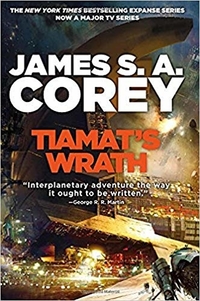
Tiamat's Wrath by James S.A. Corey

Published by Orbit on March 26, 2019

Planning a story arc that unfolds over nine books is an impressive feat. Executing the plan with the skill displayed by the writers who call themselves James S.A. Corey is even more impressive. The Expanse is one of the finest accomplishments in the history of space opera.

You need to read the last seven books in this series, in order, to have a full appreciation of the background to this novel, the eighth. That’s a lot of reading. For those who have completed the assignment (and those who have watched enough of the excellent television series based on the novels to get the drift), here’s where things stand. None of this will make sense, by the way, if you aren’t familiar with the series.

The gatebuilders apparently left a massive construct in a dead system that might be their backup drive. Maybe book nine will finally resolve the mysterious rise and fall of the gatebuilders.

The Laconians are looking for a way to protect themselves from whatever destroyed the gatebuilders, although there is no evidence that Laconian civilization is actually threatened. To that end, they plan to launch a weapon that they hope will destroy or at least “send a message” to their perceived but unknown enemy. Like all authoritarians, the Laconians are sure that fear, terror and belligerence will help them get their way. A few Laconians, as well as science fiction fans and pretty much anyone who can spark a thought, know that chucking a bomb through a gate at beings who have the ability to bend reality is just a bad idea. Sadly, authoritarians think with their mighty weapons, not with their tiny brains.

Meanwhile, James Holden is being held on Laconia, where he is not exactly imprisoned but not free to leave. Teresa Duarte, the daughter of the High Counsel of Laconia, views Holden with some suspicion, perhaps with good reason, although her dog knows that Holden is a good guy. But Teresa, being an entitled teen, is also rebellious. She develops a secret friendship with a dude who has hidden himself in a cave. The identity of the friend, and the friend’s fate, will be important to fans of the series.

The Rocinante is in storage and Alex Kamal is now piloting the Gathering Storm, a stolen Laconian warship. Bobbie Draper is leading a secret military mission using that ship against Laconia. Naomi Nagata is argumentative, as always. In the end, the plot will seek a reunification of the original crew of the Rocinante, or at least those who survive.

A theme that consistently emerges from this series is that war is stupid and that leaders and pundits who push for avoidable wars are stupid. In that regard, the Laconian leadership is monstrously stupid, as any number of characters recognize, including Elvi Okoye, a biologist who has been conducting research for the Laconians and who had a firsthand view of the results of the Laconian attempt to fight aliens they know nothing about.

Another theme that is central to the series is self-sacrifice. Characters die for the greater good. Series fans have likely come to appreciate and admire one or two characters who do not survive to the end of this novel. At least one of them dies a good death, displaying the kind of heroism that fans of The Expanse expect.

Like all the books in the series, Tiamat’s Wrath is a strong mix of action, politics, and philosophy. At times, the story is genuinely touching. Characters in the series never stop growing although they have largely settled into their personalities. In this installment, at least one of the key characters has changed in ways at which the story only hints.

I recommend the novel, but only for readers who are willing to commit to the entire series, starting with Leviathan Wakes. It is worth the investment of time for science fiction fans, but anyone who enjoys an intelligent outgrowth of pulp fiction will likely find the series to be rewarding.

RECOMMENDED

Monday
Mar032014

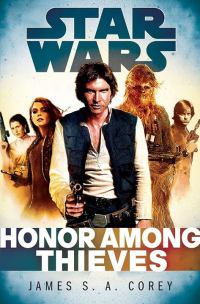
Honor Among Thieves by James S.A. Corey

Published by Del Rey on March 4, 2014

The full title of this novel is Star Wars: Empire and Rebellion: Honor Among Thieves. It is the second novel in the Empire and Rebellion series. I did not read the first and I generally do not try to keep up with Star Wars novels (that would be a full time commitment in itself), but I read this one because I admired the work that the writing team known as James S.A. Corey did in The Expanse novels.

Most of Honor Among Thieves concerns a potential new weapon -- developed by a long-departed race -- that both the Empire and the Rebel Forces would like to acquire. A Rebel spy named Scarlet Hack tracked down information about its location but the information was stolen before she could steal it herself. Now the Empire is after the thief, along with Scarlet and Han Solo (and Chewbacca, of course). The chase leads them (and the Empire) to a planet that is hosting a conference attended by Princess Leia, who is there to do some fundraising. There are, naturally enough, a wealth of fights, space battles, smugglers, bounty hunters, dive bars, odd aliens, droids, and all the other elements that make Star Wars enjoyable.

In the meantime, the Rebel Forces need to find a new secret base. In an early chapter, Leia dispatches Luke Skywalker to check out a possible planet, but it's in the galaxy's equivalent of the Bermuda Triangle. That storyline disappears for a time, but Luke resurfaces in the final third of the novel as the story threads weave together.

Corey's skill with characters serves the story well. Han Solo is skeptical, sarcastic, roguish-- in a word, perfect. Han isn't the introspective type but Corey has him thinking about his life -- what he might have been but for meeting Luke Skywalker, what he might become. His friendships and alliances are still uncertain but he stands on the verge of change, of acquiring meaning in a self-centered life.

The story moves at hyperspeed. The plot -- well, this is an adventure story so there isn't much of a plot. The outcome is predictable but that makes it no less fun. I was easily and willingly swept along by the narrative. Yet despite its lack of depth, Honor Among Thieves does make a salient point. The Universe needs smugglers and thieves. They represent rebellion against order ... and thus freedom. It is a lesson that even the uptight Leia can appreciate.

RECOMMENDED

Friday
Jun072013

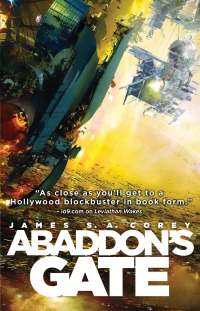
Abaddon's Gate by James S.A. Corey

Published by Orbit on June 4, 2013 

The protomolecule, once confined to Venus, has managed to launch a self-assembling Ring that sits outside the orbit of Uranus. Anything that tries to fly through the middle of the Ring comes to an immediate stop before it begins a slow motion trip in a different direction, leading to the conclusion that the Ring is some sort of gate. Representatives of Earth, Mars, and the Outer Planets all converge on the Ring, as do Jim Holden and his crew. Although Holden would prefer not to investigate the protomolecule's latest actions, he's given no choice. Of course, from the moment the Ring is introduced, the reader knows that Holden will fly through it.

As you would expect, Holden and his crew (Naomi, Alex, and Amos) return in this third novel of The Expanse. As you might not expect, so does Josephus Miller, who is back from the dead. Or maybe it's not Miller, but something Miller-like is a key character again. Also returning is Julie Mao's sister Clarissa, now known as Melba Koh. She blames Holden for Julie's death (or transformation) and she's devised a cunning plan to obtain revenge. None of this will make the slightest bit of sense unless you've read Leviathan Wakes and Caliban's War, which I would urge any fun-seeking fan of science fiction to do. You could probably understand and enjoy Abaddon's Gate without reading the first two novels, but you'd be missing sooooo much context that it would be a mistake.

Other significant characters (some new, some returning from earlier books) include: Anna Volovodov, a member of the clergy who joins a UN advisory group on a mission to the Ring; Carlos Baca, a/k/a Bull, the untrusted security chief from Earth on a converted generation ship named Behemoth that belongs to the Outer Planets; Sam Rosenberg, Behemoth's chief engineer; Clarissa's wealthy aunt, Tilly Fagan; and Monica Stuart, a journalist who accompanies Holden and his crew, documenting their response to the Ring.

As they proved in the first two books, the writing team known as James S.A. Corey knows how to tell a fast-moving story that mixes humor with drama. This time, Holden is up against a space station that makes the Death Star look like a slingshot, as well as the usual array of humans who would like to jettison him out an airlock. While the action is never shortchanged (there's enough to satisfy the most ardent space opera fan), the novels are so good because the writers bring the story back to the people who are affected by it. The writers have a keen understanding of human nature and a remarkable ability to translate that understanding into emotionally complex, fully formed characters. Holden, in particular, changes a bit in every novel. This time, having lost his self-righteousness, he struggles against "creeping nihilism" and tries to recapture a sense of purpose.

Heroism and self-sacrifice have been consistent themes in The Expanse, and that remains true in Abaddon's Gate. Unlikely heroes have always emerged in these novels, and one of the new characters might be the unlikeliest of them all. As one of the minor characters notes, heroism is what happens when people don't think about the consequences of their actions. As another character demonstrates, the same is true of people who commit evil acts. Circumstances often dictate heroism, just as they dictate villainy, a subtle point that Abaddon's Gate illustrates brilliantly.

The writing is strikingly visual. Reading the Corey novels is like watching an extraordinarily detailed movie. Like the other novels in The Expanse, Abaddon's Gate delivers what fans want from space opera -- furious interstellar action, a sense of wonder and awe -- but it does more than that. The addition of a clergy member to the story invites discussions of philosophy -- not dry sermons or religious musings, but meaningful thought about forgiveness and the possibility of redemption and the benefit of using persuasion, rather than violence, to achieve just ends (themes that are present in each novel, but sharpened in focus in Abaddon's Gate). The novel is funny and exciting and moving and, on occasion, it comes close enough to being profound to set it apart from the vast majority of space opera.

RECOMMENDED