The Tzer Island book blog features book reviews written by TChris, the blog's founder.  I hope the blog will help readers discover good books and avoid bad books.  I am a reader, not a book publicist.  This blog does not exist to promote particular books, authors, or publishers.  I therefore do not participate in "virtual book tours" or conduct author interviews.  You will find no contests or giveaways here.

The blog's nonexclusive focus is on literary/mainstream fiction, thriller/crime/spy novels, and science fiction.  While the reviews cover books old and new, in and out of print, the blog does try to direct attention to books that have been recently published.  Reviews of new (or newly reprinted) books generally appear every Monday, Wednesday, and Friday.  Reviews of older books appear on occasional weekends.  Readers are invited and encouraged to comment.  See About Tzer Island for more information about this blog, its categorization of reviews, and its rating system.

Entries in Mexico (3)

Thursday
Jan222026

Eating Ashes by Brenda Navarro

First published in Mexico in 2022; published in translation by W.W. Norton/Liveright on January 20, 2026

The disturbing but familiar tropes of fiction from Mexico — drug cartels, violence against women — take a back seat to Brenda Navarro’s story of a woman whose move from Mexico to Spain did little to ease the pain of daily living. Most stories of emigration focus on the hope for a better life in a stable country. Navarro’s narrator has a different perspective: “Everyone wants to be something more, and they don’t even know how to be something less.” This is the only novel I can recall that looks back at the violence of a country like Mexico with nostalgia.

We never learn the narrator’s name, but her brother is Diego García. The narrator describes three defining events in her life. The first is her mother’s departure for Spain with the promise to send for her kids later. The narrator and her grandmother raise Diego as the years pass, waiting for their mother to make good on the promise. The narrator is clueless about what her mother has to do before she can obtain a residence card and arrange for their entry into Spain, but that is largely her mother’s fault for failing to keep her kids updated.

The second is the narrator’s eventual relocation to Spain with Diego. Most of the novel takes place in that country, first in Madrid where her mother lives and then in Barcelona where she joins her cousins to get away from her mother.

The third is Diego’s death by suicide. The narrator tells the reader about that death early in the story. It is the central event that shapes her young life.

While living in Spain, the narrator tells us that she misses everything about Mexico: “my grandmother cooking for me, even if there were times when she’d blow a gasket and get all intense, and my grandfather taking me to the movies. … And I missed the noise of the street, the music, how loud the cars were, and the tension.” She misses “not Mexico the country,” but “Mexico as a yearning.” Mostly she misses the innocence and joy of Diego as he was when they lived in Mexico. It appears that what she misses is not Mexico but the childhood she left there.

Oddly, she also misses “that strange sense of belonging, but at the same time of being a crab in a bucket climbing onto the backs of the others, trying to get out.” She misses “the passion that comes from hunger, from exhaustion, from discontent.” By contrast, Europe is passionless, a place where “what you breathed in was a sort of calm that was more like boredom. Europe seemed boring and old and lonely.”

The narrator isn’t saying that life is too easy in Spain — she still lives in relative poverty and hates the menial jobs she takes — but in Mexico she shared her hardships with others. She does not feel she belongs in Spain, where people look down on her because of her Mexican ancestry, her low station in life. She doesn’t like cleaning houses or the rear ends of old folk. She tries a gig job making deliveries but it wears her out. She doesn’t like her Scottish boyfriend because he exploits her. One message the novel delivers is that emigration leads to isolation for immigrants who are not accepted as equals in their new home.

While I appreciated that message, the story is not without its downsides. I came to think of the narrator as a whiner who has a sense of entitlement that people are usually born into. Yes, it’s hard being poor, but her stubborn refusal to return to Madrid where she could live a modestly better life with her mother, like her persistent lie to her boyfriend about being a college student, are not endearing actions. The narrator refuses to return because she “needed to prove to my mom that I could fend for myself, that we could have another kind of relationship where she wasn’t the one in charge, the one who decided for me.” Her uncle is the only character who has the courage to put her in her place: “In this family, he said, pointing a finger at me, your mother was the only one who was able to shake off all this shit we live in. Quit feeling sorry for yourself and honor her decision.”

By the novel’s end, the narrator redeems herself a bit by confessing her hypocrisy (she criticizes Diego for stealing but is herself a thief) and recognizing her selfish nature. In that sense, Eating Ashes might be seen as a coming-of-age novel with a “you can’t go home again” theme.

A more traditional theme in novels about immigration is the unfortunate reality of intolerance that pervades most nations. Ethnic Catalans in Spaiin don’t like other Spaniards, Spaniards don’t like immigrants, immigrants from Spanish-speaking countries don’t like Pakistanis, the old and the young dislike each other, and on and on. Diego’s school in Madrid punishes him for fights that were started by Spanish kids; school officials assume that the immigrant kid is the troublemaker. The narrator undergoes body cavity searches for drugs at border crossings while white people are unmolested. A character named Jimena who emigrated to Spain reminds readers of Mexico’s intolerance of the LGBTQ community.

After the narrator carries her brother’s ashes back to Mexico, we catch glimpses of the disappearances and sexual harassment that plague Mexican society. In the most vivid scene, a woman recounts the death of her sister, who is killed in a bar with a dozen others because her husband is in the military.  But this is not a story of human rights violations so much as it the very personal story of a young woman who has not yet overcome the grief and alienation that defines her life. The novel is a bit uneven but its most moving and insightful moments make it worthwhile for readers who want a different perspective on the experience of immigration.

RECOMMENDED

Friday
Aug202021

Velvet Was the Night by Silvia Moreno-Garcia

Published by Del Rey on August 17, 2021

Velvet Was the Night is a story of Mexican noir. Set in the early 1970s, the novel takes as its background a CIA funded and Mexican government-supported effort to organize private citizens as shock troops (known as Hawks) to attack protesting students. The CIA wanted to suppress communism and the Mexican government wanted to suppress dissent. Those machinations cemented Mexico’s authoritarian oppression and laid the foundation for the Dirty War.

Maite is caught in the middle of that struggle. She isn’t political. She doesn’t feel she’s much of anything. Her days, as she sees them, are dull and meaningless. Her sister berates her for wasting her life. As she turns 30, Maite is a single, insecure woman who devours romance comics, wishing her life were filled with the love and drama she reads about.

Maite can’t afford to pay for her car repairs. She supplements her income as a secretary by looking after her neighbors’ pets when they are away. Maite’s only vice is her occasional theft of a small object from a neighbor’s apartment.

Maite has been feeding Leonara’s cat. She’s vexed that Leonara hasn’t returned from her trip. When Leonara finally calls Maite and asks her to bring the cat and a box to an address, Maite becomes even more annoyed when Leonara doesn’t appear. She decides to track down Leonara so she can get paid. Her quest leads her to a group of wannabe revolutionaries and brings her to the attention of the Hawks and the secret police.

The other protagonist, Elvis, is a Hawk. At 21, he is the right age to blend with and infiltrate student groups. He admires his boss, El Mago, and is more committed to following El Mago than to any political philosophy. Elvis doesn’t mind administering beatings to send a message, but he draws the line at beating women or killing anyone. He’d rather be doing something else with his life but he doesn’t know what else he is capable of doing.

The novel alternates chapters that follow either Elvis or Maite. Their paths intersect when El Mago assigns Elvis to follow Maite. El Mago wants to find some pictures that Leonara has hidden. He hopes that Maite will lead him to Leonara.

Maite and Elvis are linked in unexpected ways, particularly by their passion for music. Elvis is impressed by the record collection he discovers while snooping through Maite’s apartment. Elvis took his name from the obvious source, but he’s also a fan of Sinatra and American standards. Maite enjoys the Spanish versions of those songs. The government has closed singing cafés and banned American rock because it views dancing as a form of anarchy, but the government can’t stop Maite or Elvis from enjoying music.

As one would expect of authoritarians and revolutionaries, none of the characters trust each other. The revolutionaries correctly believe they have an informant in their midst. An agent of the secret police named Anaya is sure that his sources are all lying to him. The Hawks and the secret police share the goal of disrupting perceived communists but they share nothing else. A Russian KGB agent adds another level of intrigue to the story. A relative of Leonara seems to want her dead. Elvis becomes increasingly disillusioned as his friends die, particularly when he learns the identity of one of the killers.

For Elvis, the story is one of intellectual disenchantment and personal growth as he begins to realize that the Hawks and their methods pose a greater threat to Mexico than the harmless student protestors. For Maite, the story is one of romance followed by inevitable heartbreak followed by the unlikely possibility of a new romance. The protagonists’ stories are simple, but they are built on strong characterizations and on the novel’s complex noir setting.

RECOMMENDED

Monday
Feb042019

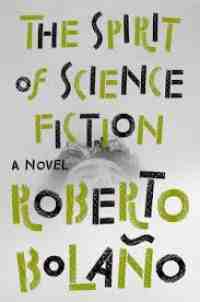
The Spirit of Science Fiction by Roberto Bolaño

Published in Spain in 2018; published in translation by Penguin Press on February 5, 2019

The Spirit of Science Fiction is an early novel that foreshadows Roberto Bolaño's later and stronger work. It was published posthumously.

While the novel begins with the interview of a writer who has won an award for his book of poetry, most of the novel is set in the past. Jan Schrella is a 17-year-old unpublished writer of science fiction, living in Mexico City with Remo. Jan is Chilean and, as he writes in a letter to Ursula K. LeGuin, Remo also “claims to be from Chile.” The story eventually suggests that Jan is Bolaño’s alter ego, although Remo is the novel’s narrator and main character. The Spirit of Science Fiction certainly has the feel of a fictionalized autobiography, although one wonders whether there might be more of Bolaño in Remo than in Jan.

Remo scrapes out a living writing book reviews and magazine articles about historic crimes. Their parents contribute the rest of their living expenses. Remo socializes while Jan writes letters to science fiction editors and writers. Some are fan letters, some recount his dreams, some contain ideas for stories, some ask the writers to pay attention to Latin America.

To alleviate his boredom (and because this is a Bolaño novel), Remo begins to attend a poetry workshop. There seems to have been an explosion of poetry workshops in Mexico, or maybe that’s just a rumor started by a mimeographed cultural weekly they get from a mysterious woman named Estrellita, who might be a poet and might be living with a son who is an artist, although the details of Estrellita’s life might also be based on rumor. In any event, Remo and José Arco decide to investigate the state of Mexican poetry. They find clues in graffiti. They listen to a professor discuss fate and the lack of meaning in poetry magazines, a discussion that provokes Remo, who believes that South Americans from poor countries are motivated by pride in their national poetry.

Remo meets and instantly feels romantic inclinations toward a woman named Laura, in the tradition of Latin men of romance (within hours of meeting her, she is “gradually turning into everyone and everything”). He pronounces his love for her before the evening is done, while she ponders how to break the news to her boyfriend. Yet Remo can’t get an erection because, paradoxically, their first kiss is too intimate a time for love-making.

Enigmatic characters populate Remo’s life, all of whom seem to have a hidden intellect and a desire to write poetry, including the toothless young mechanic who sells him a stolen motorcycle named Aztec Princess and the woman who complains that Jan has disrespected literature by constructing a table from science fiction paperbacks. The characters and their actions often have a surrealistic feel.

In the novel’s last section, Remo and Laura explore Mexican bathhouses and the erotic (or not) possibilities they inspire when strangers knock on the door. The ending comes across as Bolaño deciding he needed to end the story somewhere, but it abandons all the other characters, giving that section of the story a disconnected feel. Still, the lives of the characters and the atmosphere that Bolaño creates make it easy to recommend The Spirit of Science Fiction, perhaps as a prelude to his outstanding The Savage Detectives.

RECOMMENDED