The Tzer Island book blog features book reviews written by TChris, the blog's founder.  I hope the blog will help readers discover good books and avoid bad books.  I am a reader, not a book publicist.  This blog does not exist to promote particular books, authors, or publishers.  I therefore do not participate in "virtual book tours" or conduct author interviews.  You will find no contests or giveaways here.

The blog's nonexclusive focus is on literary/mainstream fiction, thriller/crime/spy novels, and science fiction.  While the reviews cover books old and new, in and out of print, the blog does try to direct attention to books that have been recently published.  Reviews of new (or newly reprinted) books generally appear every Monday, Wednesday, and Friday.  Reviews of older books appear on occasional weekends.  Readers are invited and encouraged to comment.  See About Tzer Island for more information about this blog, its categorization of reviews, and its rating system.

Entries in Salman Rushdie (4)

Monday
Nov102025

The Eleventh Hour by Salman Rushdie

Published by Random House on November 4, 2025

The Eleventh Hour collects five stories, three of novella length and two that are shorter. The most entertaining novella in the collection is “The Musician of Kahani.” It is, in part, the story of a man who loses his way and the daughter who guides his return. The man finds false meaning in life when he abandons his family to join a cult leader’s community as a preparer and ladler of soup. The daughter is a musical prodigy who marries into wealth and develops a sort of superpower that allows her to project her music to her distant father’s ears. It is also the story of a mother whose “brilliant husband falls for a stupid fraud” and whose “brilliant daughter falls for a stupid playboy,” leaving her “alone in our home without the two people who were my whole world.” The story touches on familiar themes in fiction that focuses on India: the dominance of men, parental control of children throughout their lives, the disparity of wealth, the misplaced importance given to high social status (recast as “brand identity”). Satirical observations lighten the mood, but the reconciliation of a family, decent people who stray from their paths before reuniting, is moving.

“Late” tells the story of a gay British professor who achieved fame with the only novel he ever wrote — a classic work set in India. He lived a reclusive life in an “ivory tower of infirm old men” until he woke up one morning to discover that he had died. Only one person, a student from India studying the history of religion and its intersection with the state, can see his ghost. She volunteers to act as a guide to the professor’s rooms, left untouched as a tribute by the university that employed him. Contrary to his solitary nature, the professor is displeased that nobody ever visits his rooms, but he is also unhappy to discover that his spirit will disintegrate if he leaves the campus. He views death as “proof of the pointlessness of life,” particularly his own not-quite-death that has him dwelling in a literal fog (perhaps a soup made from the remains of other souls) as what’s left of him decays. Death focuses his mind on revenge against the College Provost, who gave him a choice between sexual freedom and a place at the College, but how can he pursue that goal without a body?

The theme of disappearance also animates “Oklahoma,” purportedly an unfinished manuscript that tells a story of ambiguous meaning, building on Kafka’s unfinished novel Amerika, a novel whose central character will never find peace, having been abandoned by his creator. The story includes an extended riff about Francisco Goya, told from his unhappy point of view. The writer-narrator has a writer uncle who, though presumed dead, has apparently continued writing. Or is the narrator carrying on his dead uncle’s work? By the time the story generates an “apparition, this sci-fi incarnation of beauty,” who “was not real, she was a phantom I had brought into being to express my need for love,” I lost interest. “Oklahoma” showcases Rushdie’s astonishing prose but, sad to say, its full meaning escaped me. My fault more than Rushdie’s, I’m sure.

The two short stories address the problem of aging — a problem that eventually vexes everyone who survives youth and middle age. The characters in “In the South,” though known as Senior and Junior, are both 81. Senior’s other friends have died, along with his “kindly” wife. He used a broker to find a new one, a woman with a wooden leg who is unkind, perhaps in response to his own unkindness. “Instead of unhappy solitude they found themselves trapped in unhappy togetherness.” Senior feels like a shadow: “The old move through the world of the young like shades, unseen, of no concern.” Particularly in the story’s last pages, Senior would rather be dead, but as he comes to understand: “Death and life were just adjacent verandas.”

The more interesting short story, “The Old Man in the Piazza,” makes the argument that soaring prose depends on conditions of dissent. In times of agreement, language is muted. Language is a character in the story, sitting in a corner of the piazza during a time when the word “no” was outlawed (although rejection was not, as an old man learned: “The old man was younger then, and his heart ached a lot, thanks to the repeated rejections of its sincerely offered emotions by young women with hair of different colors.”). It was forbidden to debunk even the most risible propositions: “the nocturnal metamorphosis of the immigrant population into drooling sex monsters, the benefits of raising the taxes paid by the poor.” Finally fed up, Language screams and the age of argumentation begins. What takes center stage is an outpouring of unattractive words, “not our language’s beautiful and justly celebrated poetry,” but “Go fuck yourself” and similar expressions.

“The Old Man in the Piazza” explodes the myth (less prevalent in the US than other nations) that aging inevitably bestows wisdom upon those who survive it. Language favors nuance over the simplistic certainties that pass for wisdom: “She cares only for words of many-layered beauty, for fineness of expression, for the subtlety of what is spoken and the resonance of what is better left unspoken, for the meanings between the words, and the illumination of those meanings that only her greatest disciples can provide.”

Readers expect insightful observations about society from Rushdie. Each entry in this volume delivers. Characters contemplate the tension between liberty and goodness (does the ideal of freedom include freedom to be bad?), between individualism and social norms, between definitions of morality that benefit the ruling class and those that are more objective. Rushdie illustrates the conflict that people raised in the conservative political climate feel when they experience the freedoms that are taken for granted in most of western Europe, including sexual freedom and the ability to make choices that are not restricted by family traditions. He explores generational change, contrasts the old and the young, and compares the fear of death to the fear of living.

Chattering characters explore questions of philosophy, sometimes by accident. Some of their theories border on lunacy (stars are just the sun shining through a colander that covers the city at night) but should rational people correct them or listen patiently? “Are mistaken notions harmful to the brain, to the community, to the health of the body politic, or are they simply errors to be tolerated as the product of simple minds?” That question gains currency when applied to climate change deniers and anti-vaxxers.

Religion, art, madness, war and evil, culture and religion, the language of poetry and prose, and the nature of reality are just a few of the topics Rushdie tackles. While the stories are uneven, I give Rushdie credit for trying to do something new in each one. As a writer who marries striking prose to intriguing ideas, Rushdie always gives readers something to enjoy as they try to get at his meaning.

RECOMMENDED

Monday
Sep022019

Quichotte by Salman Rushdie

Published by Random House on September 3, 2019

Quichotte is about the quest for love, happiness, fulfillment, meaning, or whatever it is that people search for, often fruitlessly, even when the quest is delusional and obsessional. It is also about reconciliation or its absence in familial relationships, the “destructive, mind-numbing junk culture” in which we live, the twinned topics of immigration and racism, and “the intertwining of fictional and ‘real’ realities.” Salman Rushdie offers stories within stories, crossing and combining genres: a family saga bumps up against a search for alternate universes; a quixotic quest joins a love story with elements of fantasy and mystery. A little Cervantes, a bit of Camelot, some Arthur C. Clarke, a couple of parodied Lifetime movie plots, a sprinkling of mythology, any number of classic crime novel themes — Rushdie pulls it all together and makes it fresh and relevant to the contemporary world.

In a style he has perfected, Rushdie mixes references to Greek classics, Eastern religions, and American/Bollywood pop culture (music, television, movies, and sometimes even a book) in sentences that are surprising, entertaining, and insightful. Rushdie portrays America in all its complexity, illuminating each America — the one where education is valued and the one where education is brainwashing, the one where vaccines keep kids safe and the one where vaccines are a con game, the one where only white skins matter and the one that embraces diversity — by placing America today into a larger historical and cultural context.

He does this by nesting stories within stories. The central story revolves around Ismael Smile, a pharmaceutical salesman who retires involuntarily at the instruction of his employer-cousin, who still has Smile make occasional discreet deliveries. An Internal Event befuddled Smile’s memory, leaving him unable to separate constructed from actual reality. His life consists largely of watching television, a pastime that sparks his obsession with Salma R. He becomes “a brown man in America longing for a brown woman.” Thinking himself unworthy of Salma, Smile decides to write her a series of letters, using an assumed name, to recount his exploits and win her admiration. He eventually comes to understand that by becoming worthy of the woman he loves, he might feel worthy of being himself.

Smile writes his love letters using the pseudonym Quichotte, the French version of Quixote. Constructing an alternate reality is consistent with the age in which he lives, the Age of Anything-Can-Happen, where even the host of a scripted reality show can become president.

Salma R., a Bollywood actress who starred in an American television series before becoming America’s next Oprah, is further proof that Anything-Can-Happen. Rushdie gives her a full and amusing history and makes her smart, beguiling, and capable of foiling all the men who want to control her. Salma embarks on her own quest, one that she can only fulfill with opioids supplied, coincidentally, by Quichotte’s former employer.

The next nested story, a level removed from Smile’s, reveals that Smile is the imaginary construct of a writer who has turned his attention from spy novels to serious literature. The aging novelist, born in India and now living in New York, identifies himself as Brother but writes as Sam DuChamp. He tells the reader about his broken family and suggests that “broken families may be our best available lens through which to view this broken world.” Brother conceives Smile as his alter-ego, just as Brother is presumably Rushdie’s. Brother also confides in the reader that Smile’s encounter with apocalyptic oblivion is Brother’s attempt to explore the topic of death, which will soon enough visit Brother and everyone else, bringing an end to the world, or at least to its perception, a distinction that presumably has little relevance to the dead. Brother eventually travels to London to meet with Sister, from whom Brother has been estranged for 17 years, since a falling out over the division of their inheritance.

Smile imagines he has a son named Sancho. Some chapters are narrated by Sancho, who takes on a reality (and a quest) of his own. Sancho is vaguely aware of a creator lurking behind Smile, an entity he thinks must be God. Of course, Rushdie created Brother who created Smile who created Sancho, which must make Rushdie the father of all gods — or at least imaginary gods, since Smile does not believe in a deity, and thus neither does Sancho. Nor does Sancho believe in Jiminy Cricket, even when he finds himself taking (or rejecting) instructions from the Italian insect who wanted to be human.

So there’s the setup, all packed into the first quarter of a novel that, being one of Rushdie’s, is dense with ideas. In his delightfully meandering prose, Rushdie observes the world’s peoples and problems, including America’s ugly history of racism and white supremacy, and its British counterpart in Brexit. Rushdie (through DuChamp) opines that modern stories must sprawl to reflect a world connected by communication, travel, and immigration. His story suggests that migrants are made to feel unwelcome by those who do not travel, including English citizens who share a “wild nostalgia for an imaginary golden age when all attitudes were Anglo–Saxon and all English skins were white.” Characters discuss identity and the difficulty of preserving an old identity while absorbing a new one.

Rushdie touches upon the use of wealth to create OxyContin addicts (Smile’s cousin and former employer is modeled on, although a lesser version of, the Sackett family), Russian hackers, the hidden shame of child abuse in families that shelter abusers, fear of death, the loss of mental faculties, and whether family members can ever forgive unforgiveable offenses. Perhaps the novel is so multifaceted that no single story can be explored in depth. Perhaps the story’s treatment of the opioid epidemic and of racism directed at immigrants is too cursory to be revealing. Perhaps the characters are reflections of their times rather than realistic characters a reader will care about (Rushdie does not create sympathy for Smile in the way that Cervantes built sympathy for Don Quixote). Perhaps the plot is a mad swirl that never quite settles. Notwithstanding all the objections that, perhaps, a reader could lodge against Quichotte, the book stands as an absorbing and amusing indictment of a divisive “junk culture” that probably deserves the clever ending Rushdie imagines for it. Rushdie might leave a reader dazed, but he always dazzles.

RECOMMENDED

Wednesday
Sep062017

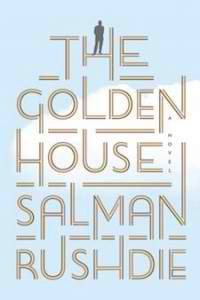
The Golden House by Salman Rushdie

Published by Random House on September 5, 2017

Salman Rushdie explores multiple themes in The Golden House, including “the nature of goodness”. The concept is elusive, but he finds it in “unshakable love” and happiness, for as long as it exists until it is replaced by unhappiness. Goodness is always at war with its opposite, and Rushdie also explores the potential for both good and evil that resides in every person. Evil in the novel is most often represented by betrayal.

The nature of change, its inevitability and whether it is possible to change the soul, is another theme. An aristocratic man who calls himself Nero Golden has come to New York, leaving India and his Muslim heritage behind, because America is “the land of the self-made self” where it is possible “to move beyond memory and roots and language and race,” to “step away from yesterday and start tomorrow as if it isn’t part of the same week.” He has erased his part and started anew — or so he thinks. Eventually his sins of the past are revealed, as are their consequences.

Nero Golden’s story of entitlement is narrated by his young neighbor René, a Manhattan resident of Belgian heritage who fancies himself a filmmaker or at least a screenwriter. René’s parents are among the few who have discovered the true reason for Golden’s flight from India. René looks to Nero Golden for screenplay inspiration, as he looks to a woman named Suchitra for love.

Nero Golden has three sons, two (Petya and Apu) from the same woman and the third (D.) from another. Their familial ties might be strengthened when a new woman enters their father’s life, perhaps threatening their inheritance, but the children are divided in their response to Vasilisa Arsenyeva.

The first half of the novel sets up the characters and their relationships. The second half begins with René coming to live in the Golden household and all too wittingly getting caught up in a scheme that Vasilisa has hatched, a scheme that will cause him to betray his friend Nero and his lover Suchitra. In addition, Apu returns to India and discovers that the sins of the father are inherited by the son.

The story of “unshakable love” involves a woman named Riya Z and her improbable love for D (Suchitra’s love of René, on the other hand, gets a good shaking). Some early chapters are devoted to D’s gender identity issues, while some later chapters focus on Petya’s intolerance of those issues. Petya, a high-functioning autistic, is equally intolerant of Abu’s political beliefs, an animosity that Abu reciprocates, giving Rushdie an opportunity to present a microcosm of divided America. But betrayal is a pervasive theme in The Golden House, and one of the novel’s first betrayals occurs when Apu steals the affections of a beautiful Somali sculptor from Petya.

Divided America is, in fact, a recurring theme as, toward the novel’s end, the Joker defeats Batgirl in the presidential election. Some of Rushdie’s strongest writing dissects the belief (firmly held by voters who “brought the horror to power”) that “knowing things is elite and they hate elitists” so that “education, art, music, film, becomes a reason for being loathed.” Readers who might be scorned as “elitists” can find refuge in Rushdie’s pages, which presume a broad level of knowledge or at least enough intellectual curiosity to Google an unfamiliar name. Knowledge is not power, Rushdie writes; “knowledge is beauty.” And the only answer to the Joker, Rushdie tells us, is Humanity.

Rushdie packs so much into sentences that if they were water, a reader could walk on top of them. As is typical of Rushdie, the novel is packed with allusions and references to current affairs, history, politics, mythology, poetry, literature, film, and pop culture. Classics and the contemporary reside comfortably alongside each other, sometimes in the same sentence. This gives the book a cluttered feel, and while a book is supposed to be a messy house, it is difficult to journey through the rooms of The Golden House without tripping over the furniture. Still, even when he rambles, or especially when he rambles, Rushdie is interesting and enlightening.

As is also typical of Rushdie, the novel touches upon important social issues: the intersection of politics and religion; the tendency of oppressors to treat human life as expendable; “the modern obsession with identity” and its counterpart, the denial of racial heritage; the transformation of sexual identity; the gun culture; the ease with which a large percentage of the voting public can be conned, simply because they want to be conned; and the fact that an even larger percentage of the voting public care so little about their country that they don’t bother to vote. Well, look what that gets you.

Occasionally, amidst all the clutter and social observation, things happen, a plot develops, telling the tragic story of the Golden family. While generally relating that story in the first person from René’s perspective, Rushdie sometimes changes up the text with the techniques of screenplay writing and with a monologue imagined as a “collage” of conversations from which René has been edited out. As is often true in a Rushdie novel, there might be too much going on, as Rushdie’s mighty display of erudition sometimes gets in the way of telling a compelling story. But compelling or not, the story is fun and it offers enough moments of insight to make its reading a serious intellectual pleasure, although perhaps not a strong emotional pleasure.

RECOMMENDED

Monday
Sep072015

Two Years Eight Months and Twenty-Eight Nights by Salman Rushdie

Published by Random House on September 8, 2015

Two years, eight months and 28 nights is one thousand nights and one night. Blending magic and myth, science fiction and fantasy, superhero comic books and classic literature, Salman Rushdie tells us the story of the Two Worlds' War from the perspective of a narrator who lives in a better time, about a thousand and one years from now. The story begins, however, in the distant past.

Dunia, also known as the Lightning Princess, is a jinni. In the twelfth century, Dunia took a human lover named Ibn Rushd, a philosopher-writer-storyteller. She has a thing for philosophers, having also known Aristotle and Plato, but she fell in love with Rushd.

As a philosopher, Rushd is not entirely successful. He considers himself defeated by the philosopher Ghazili, who died before Rushd was born. Ghazili jeered at philosophy because, to his mind, logic and reason have no role in a Universe that is ruled by God's will. Rushd believes in logic and science and even in God but not in religion because "the godly are God's worst advocates." Challenging accepted interpretations of the Qu'ran has caused some trouble for Rushd (including book-burnings and exile) until a Caliph deems him "rehabilitated." Salman Rushdie is plainly having some fun using Rushd as his alter-ego. Rushdie's concerns with religious intolerance (as well as other forms of intolerance) resurface frequently in the story.

Rushd is not good to Dunia or his family. The bastard children he ignores eventually have progeny who disperse to all corners of the globe, including North America, where the story resumes 800 years later. The story sometimes circles back to Rushd who, experiencing a post-death epiphany, enlists Dunia's help to "reunite their scattered family and help it right the coming world cataclysm." It is that quest that animates the book's plot. Dunia's task includes avenging treachery by dark princes of the jinn while fending off a jinn invasion (easier than it sounds, since many jinn are too lazy or horny to bother making the journey through the wormhole).

Dunia's descendants are mostly notable for the absence of earlobes until Dunia awakens their powers. Key characters include Geronimo Manezes (a gardener who is afflicted with a worsening case of levitation, a condition he equates with "a previously unknown virus: a gravity bug"); a baby who exposes corrupt politicians; Teresa Saca, a young woman who electrocutes men with lighting from her fingertips; and Jinendra "Jimmy" Kapoor, a young artist who seems to bring his Indian superhero to life before learning that a "dark jinni" has been unleashed on the world.

The stories that Scheherazade told taught lessons. I'm not sure that Rushdie's updated version teaches lessons so much as it satirizes the lessons that others teach. Rushdie lampoons philosophy and its "more tedious cousin" theology, particularly the notions that "only fear will move sinful Man towards God" and the countervailing view that "with the passage of time human beings will turn from faith to reason, in spite of all the inadequacies of the rational mind." Perhaps one lesson to take from the novel is Rushdie's observation that modern life moves so quickly that we have forgotten the pleasure of lingering (and no longer have the attention spans that slowly unfolding pleasures command). Another might lie in a character's realization that the illusion of reality is preferable to a known fantasy. And another is that using fear (of government or God) to control behavior is bound to lead to oppression. And another: "rage destroys the enraged." Of course, the virtue of tolerance and of preserving free thought by separating church and state is always a good lesson.

If the lessons are a bit heavy-handed, if some of Rusdie's targets are easy, that seems a natural product of satire. While satire is fun, it also makes the story seem less substantial. My only other quarrel with Two Years is that some moments in the story are a bit too silly, but those moments are few.

Well into the novel, a character from the future explains that "to tell a story about the past is to tell a story about the present" and "to recount a fantasy" is to recount "a tale about the actual." Stories from the past, including myths, help us explore how we got there from here. I'm not sure Rushdie's novel accomplishes those goals, but the story is entertaining and, not surprisingly, it is enlivened by Rushdie's rich prose.

RECOMMENDED