Thursday
Nov282019
The Tzer Island book blog features book reviews written by TChris, the blog's founder. I hope the blog will help readers discover good books and avoid bad books. I am a reader, not a book publicist. This blog does not exist to promote particular books, authors, or publishers. I therefore do not participate in "virtual book tours" or conduct author interviews. You will find no contests or giveaways here.
The blog's nonexclusive focus is on literary/mainstream fiction, thriller/crime/spy novels, and science fiction. While the reviews cover books old and new, in and out of print, the blog does try to direct attention to books that have been recently published. Reviews of new (or newly reprinted) books generally appear every Monday, Wednesday, and Friday. Reviews of older books appear on occasional weekends. Readers are invited and encouraged to comment. See About Tzer Island for more information about this blog, its categorization of reviews, and its rating system.
 Wednesday, November 27, 2019 at 5:14AM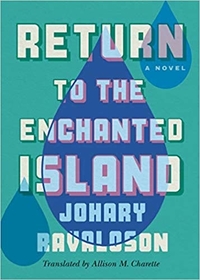
Published in France in 2012; published in translation by Amazon Crossing on November 5, 2019
“Love, more often than anything else, ends. The thing that makes it seem to us to transcend all else is that when it dies, those who had it in their lives become like dead men.” Those accurately depressing words are spoken out of the blue, and to his wife’s dismay, by Ietsy Razak, the main character in Return to the Enchanted Island. The title sounds like the reboot of a bad television show, but Enchanted Island is the name given to Madagascar in a 2005 documentary.
Ietsy Razak lives in the family home (Anosisoa) on the Enchanted Island with Lea-Nour, his wife of fifteen years, and their children. Ietsy enjoys a life of ancestral privilege. His antics as a child caused his transfer from the local Jesuit school to a boarding school in France run by Benedictine monks. His aunt and uncle live in Paris, and from them he learned about his absent mother. For the most part, Iestsy chases girls and bombs out of school, becoming “an illegal immigrant through sheer indifference,” while explaining to his friends that “doing nothing, for him, was a philosophical project.”
The novel includes an origin myth, explaining that the original Ietsy fell to earth and, alone on the enchanted island, created statutes for company. Breath took pity and breathed life into the statutes but took the breath away from some of them to punish Ietsy for a sexual transgression. The living statutes became known as the Vazimbas, who are now considered the earliest inhabitants of the mountains of central Madagascar. The origin myth evolves into the story of The-Lord-Who-Never-Gets-Wet and his search for a sacred lake made from tears, leading to the Vazimba migration.
I enjoyed the origin myth and at least some of the story in France. After Ietsy returns to Madagascar, the story is uneventful. Ietsy spends most of his time taking note of how privileged he is in comparison to most of his fellow citizens, while reminiscing about or adding to his varied sexual conquests. He often states, perhaps with ironic intent, that he is “blessed by the Gods and Ancestors,” but he seems to regard the blessing as entitlement. We learn how Ietsy rediscovers and marries Lea-Nour but the relationship is dull.
Apart from the origin myth, Return to the Enchanted Island tells us surprisingly little about Madagascar. We learn that the “cultured Malagasy elite had readily given up their mother tongue,” particularly when they are in the presence of foreigners so as not to give offense. We learn that the elite work hard to perpetuate their elite status, but that’s true everywhere. We learn very little about the non-elite. We hear that Ietsy has returned to the “City of a Thousand Circumstances” and the “City of a Thousand Lovers” and the “City of a Thousand Rites” and several similarly glib descriptions, yet we learn little of the city itself.
So while the story provides insight into Madagascar’s oral traditions and the role of Vasimbas in modern life, it does little to paint a picture of contemporary Madagascar. Perhaps that’s because Johary Ravaloson lives in France, which is the novel’s primary focus. Ravaloson can write about anything he pleases, but the title implies that Ietsy’s return to his native land might change him in some way, or that he might change Madagascar. If he comes of age in Madagascar by finding his place in the world, as blurbs suggest, I didn’t notice.
Ietsy’s time in France, viewed as a portrait of a wasted life, is more interesting. Ietsy’s efforts to avoid ID checkpoints that are the bane of illegal immigrants give the story some dramatic meat. Competing perspectives on love, including a French lover’s contention that “love that was based on trust should not be confined within a couple, but should instead allow each individual to blossom and give the other person strength to explore the world and life,” add a splash of pop philosophy to the narrative. The portions of the novel that address Ietsy’s return to Madagascar, however, are too problematic to make the book a success.
RECOMMENDED WITH RESERVATIONS
Monday, November 25, 2019 at 3:57AM 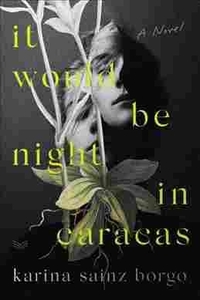
First published in Spain in 2019; published in translation by HarperCollins/HarperVia on October 15, 2019
Adelaida Falcón, the narrator of It Would Be Night in Caracas, begins the novel with her mother’s death and funeral, including her fear that grave robbers will make off with her mother’s glasses. She pays for the burial with one of her last 50-euro notes, the bolivar having become a currency that is useful only for lighting fires. Her neighbors wonder if she will rent out the room in which her mother slept, but Adelaida will not have that chance as criminals take over her apartment. She survives by quietly inhabiting the apartment of a dead neighbor — a salvation made possible only because nobody else has discovered the neighbor’s corpse.
Criminal gangs roam the streets, often under the protection of the police. Food shortages have caused long lines and a thriving black market. Yet Adelaida is determined not to be anyone’s victim. Flashbacks to her time with her mother show us that Adelaida has her own mind and is stubborn about changing it.
The plot follows Adeliada’s scheme to escape to Spain by taking over the dead neighbor’s identity. Yet the story’s power lies not in the plot, which follows a simple and predictable path that depends on unlikely happenstance, but in the details of Adelaida’s life. People Adelaida knows are being murdered. Journalists are killed for reporting the truth. Their sources are killed for revealing the truth. A criminal friend risks his life to help Adeliada, suggesting that crime is sometimes an inescapable circumstances rather than a character flaw.
Adeliada condemns Venezuela’s upper class for judging her as the daughter of a single mother. She also condemns the nation’s obsession with beauty and youth, with keeping up appearances as everything falls apart, with its acceptance of men who walk out on their families. “The result was a nation built on the cleft of its own contradictions, on the tectonic fault of a landscape always on the brink of tumbling down on its inhabitants’ heads.”
Adeliada reserves much of her commentary for what Caracas has lost. Once a vibrant city of immigrants, built with the energy of people looking for a new and different life, the “children of those immigrants, people who bore little resemblance to their surnames, starting heading back across the ocean to countries that were home to other people, searching for the stock with which their own country was built.”
It Would Be Night in Caracas benefits from rich and evocative prose. Still, the novel is largely a howl of pain at the loss of a beloved country. While the plot builds little tension (there’s never a doubt about the outcome), tension is inherent in the anarchy and danger of a city gone feral. As a snapshot of the impossible anguish that ordinary residents of Caracas must endure, the novel has something to say. I recommend it for its value as a snaphot, not for its doubtful merit as a fully realized novel.
RECOMMENDED WITH RESERVATIONS
Friday, November 22, 2019 at 6:03AM 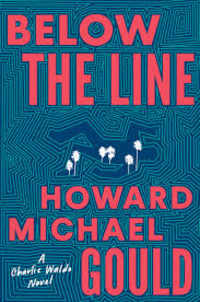
Published by Dutton on August 13, 2019
When a crime novelist introduces a new series and the first book is entertaining, a reader might wonder whether the success was a fluke. When the second book is just as good or even better, the series will probably go on the reader’s “gotta get the next one” list. That’s where I put the Charlie Waldo series.
Waldo is back in action in this sequel to Last Looks. Waldo is still struggling to live a minimalistic life that emits no carbons, but his relationship with Lorena Nascimento is forcing a tradeoff: in exchange for good sex, he must occasionally share an Uber with her. Lorena’s private investigation firm is struggling, even with the helpful publicity that Waldo has unwillingly generated. To earn a few bucks, Lorena agrees to help a teenage girl named Stevie locate her missing brother while her parents are on vacation. That task proves to be deceptively easy, but the investigation takes an unexpected turn when Stevie goes missing after her high school teacher (with whom she claims to have slept) is murdered. Waldo gets involved only because Stevie is a suspect and he thinks she might be innocent.
Waldo’s sympathy for Stevie is probably undeserved. Stevie is the teenage drama queen from hell. She taunts men with her flirtatious sexuality and tells so many lies that it is challenging to recognize the occasional truth she might utter. Waldo wants to believe her, a fact that Lorena attributes to Waldo being smitten by the provocative teen.
Having been sent on a wild goose chase by Stevie, Lorena soon finds herself chasing another wild goose when she is hired to prove that a woman’s husband is having an affair. That case also takes an unexpected turn. Naturally, the two odd cases are linked. Waldo and Lorena discover the link by the novel’s midway point, but they still have some detecting to do before they will understand why Lorena was twice hired under false pretenses.
More murders are committed —snotty Stevie generally appearing as the number one suspect — before the novel reaches its climax. The plot also involves designer drugs, a soap opera actress whose career has gone south, and sexting between cousins. Poor Waldo, who is the opposite of the typical macho private eye, is beaten repeatedly, mauled by an expensive dog, and tasered. It’s enough to make Waldo wonder whether he was smart to end his self-imposed exile. Doing justice and getting good sex come at a heavy price, at least in Waldo’s life.
The first novel established Waldo as a broken character who has tried to repair his life by owning no more than one hundred things. That characterization added humor to that continues in the second installment as Waldo frets about (for example) whether the sling for his broken arm should count as a new thing.
Waldo’s quirky character and his vulnerable nature makes him likeable, while his iffy relationship with Loretta illustrates difficulties that are common in relationships. At one point Waldo realizes he had “taken the depth of her investment for granted, luxuriating in his own doubts without a thought that all this time she had been harboring her own.” He understands that he isn’t the man Loretta expected him to be, but by the end, he wonders whether Loretta is the woman he wants her to be.
Below the Line blends humor and light drama in a smart plot with quirky but realistic characters. Waldo’s agreement to help a drug dealer’s daughter with a school assignment illustrates just how strange his good-hearted life has become, but that’s the kind of scene that makes me look forward to reading the next chapter of his life.
RECOMMENDED
Wednesday, November 20, 2019 at 7:17AM 
Published by Atlantic Monthly Press November 5, 2019
Kate Henderson is in charge of the Secret Intelligence Service’s Russia desk. She recruits a 17-year-old Bulgarian girl named Maya, living illegally in London, to work as a nanny for the top Russian spy. She places a microphone on a yacht where the most elite agents of Russian intelligence gather to discuss a plot to replace the Prime Minister with someone in their control.
Is this a fortunate discovery of a nefarious plot or is it misinformation? Kate learned of the meeting from an old friend who is now positioned to leak Russian secrets to her. Whether he is leaking the truth is a subject of debate as the story progresses. The fact that she did not immediately reveal the source of her information to C (her boss) is viewed with suspicion by some other members of SIS. Kate’s husband, Stuart, views her renewed acquaintance with her old friend with a different kind of suspicion.
As Kate investigates the various candidates to become the next PM, one of whom works closely with Stuart, Kate develops suspicions of her own about Stuart’s fidelity. Kate isn’t sure she can trust C or the other highly positioned colleagues in the SIS. Kate really only trusts a couple of people, co-workers Rav and Julie.
But can she trust anyone, really? The plot involves a classic mole hunt. Kate knows that someone close to her work is giving information to the Russians. She narrows the field to five suspects. The reader is invited to join the guessing game.
Kate’s distrust of her husband adds a bit of domestic drama to the plot, as does her daughter’s infatuation with an older boy who wants to take her virginity. The domestic drama seems a bit forced while the relationship with the teenage daughter resolves too easily. The mother-daughter aspect of the story is probably meant to make parents feel comforted: yes, there will be shouting, but then the daughter will come to her senses and acknowledge what a wonderful mother she has. Really? The mutual suspicions of infidelity are integral to the plot but Tom Bradby didn’t make me care about either Kate or Stuart, much less about their marriage.
The mystery of the mole’s identity is reasonably good, in that the answer isn’t obvious, although neither is it unexpected. The reveal is a bit underwhelming, in part because Kate is such a self-righteous moralizer that she can’t resist delivering a tiresome lecture about how she is too perfect to betray anyone, particularly her country, and why can’t everyone be just like her? The mole's motivation to help the Russians is also forced; I just didn’t buy it. I can't discuss the election outcome without spoiling the story, but it just struck me as silly.
Stories of moles are legion in spy fiction. This one is about average. Bradby’s prose is fluid and the story maintained my interest when it focused on the mole rather than Kate’s family issues. My recommendation is lukewarm because the story builds to a climax that fizzles more than it climaxes.
RECOMMENDED WITH RESERVATIONS
