The Tzer Island book blog features book reviews written by TChris, the blog's founder.  I hope the blog will help readers discover good books and avoid bad books.  I am a reader, not a book publicist.  This blog does not exist to promote particular books, authors, or publishers.  I therefore do not participate in "virtual book tours" or conduct author interviews.  You will find no contests or giveaways here.

The blog's nonexclusive focus is on literary/mainstream fiction, thriller/crime/spy novels, and science fiction.  While the reviews cover books old and new, in and out of print, the blog does try to direct attention to books that have been recently published.  Reviews of new (or newly reprinted) books generally appear every Monday, Wednesday, and Friday.  Reviews of older books appear on occasional weekends.  Readers are invited and encouraged to comment.  See About Tzer Island for more information about this blog, its categorization of reviews, and its rating system.

Entries in Japan (37)

Friday
Jan282011

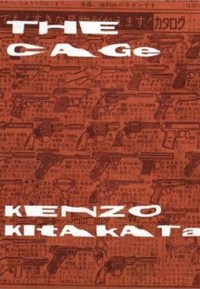
The Cage by Kenzo Kitakata

First published in Japan in 1983; English translation published by Vertical on September 5, 2006

If you can get past the cliché-peppered prose -- everything from "listen and listen good" to a character who "cased the joint" -- The Cage tells an appealing story about Japanese gangsters and cops that's fun to read. I don't know whether to blame the clichés on Kenzo Kitakata (maybe familiar phrases from 1940's gangster movies aren't clichés in Japanese) or on a lazy translator (the more likely culprit), but they are an irritating impediment to full enjoyment of the novel's lively plot.

Takino owns a supermarket; his wife runs a coffee shop on the building's second floor. We suspect that Takino is a dangerous man with an interesting past when a supermarket chain tries to force him to sell his business -- an action the chain's representatives soon regret. Resolving that problem seems to give Takino a taste for the violence he thought he had left in the past. When Takino learns that his friend Takayasu is in a jam, he volunteers to help. The police are trying to find a yakuza named Sugimura because they want him to testify against the Maruwa gang concerning an apparent drug-related murder. For reasons that are not made clear until midway through the novel, the Murawa gang is also after Sugimura. To further complicate the story, Sugimura's lover Reiko is the daughter of a Murawa boss. Takayasu has agreed to smuggle Sugimura and Reiko out of Japan but he's being watched by the police and the gang. Takino takes over the job.

Kitakata reveals Takino's checkered past as the story unfolds. Although Takino's life as a supermarket owner is superficially bland (he drinks plenty of cold coffee and carves pipes out of briar in scenes that slow the action a bit too much), Takino occupies the remainder of his free time with a more interesting pursuit -- cheating on his wife. Readers who need to like the characters in order to enjoy a book might want to skip The Cage because Takino isn't a particularly sympathetic guy. He feels intense loyalty to his friend Takayasu but doesn't seem to feel much of anything for his wife or girlfriend. Apart from Takino, the characters (including a hard-drinking police detective, a private investigator who is a reformed criminal, and women who seem to specialize in worshiping their men without griping about what jerks they are) aren't particularly fresh. The main attraction of this novel is the plot, which includes some fast-paced action scenes, interesting twists, and a suspenseful climax.

Given the novel's uneven pace, lackluster characters, and trite noir prose, it's difficult to work up much enthusiasm for the novel, even though the story is excellent.

RECOMMENDED WITH RESERVATIONS
Sunday
Jan232011

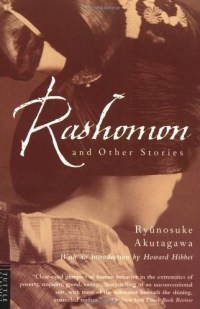
Rashomon and Other Stories by Ryunosuke Akutagawa

Translation by Takashi Kojima.  Introduction by Howard Hibbett.  First published by Tuttle Publishing in 1952.  Akutagawa's stories were written in the first quarter of the Twentieth Century.

The Tuttle Classics edition of Rashomon contains six stories. "In a Grove" recounts a woman's rape and her husband's death from the conflicting perspectives of the rapist, the woman, and the husband, each of whom provides a different account of how the husband died. Akutagawa employs the same device -- telling a story from different perspectives -- in "Kesa and Morito": after a married woman has sex with a man who loathes her, they agree to murder her husband -- but the woman's vision of that crime is quite different from the man's.

"Rashomon" -- a meditation on good and evil, on desperation and hypocrisy -- tells of a servant who cannot decide whether to steal or starve until he meets an old woman who is pulling the hair out of corpses. Lacking compassion or empathy, he fails to recognize himself in her. Similarly, the Christian values of charity and forgiveness give way to hypocrisy in "The Martyr," as Jesuit missionaries and members of the Christian church in Nagasaki condemn a devout parishioner (Lorenzo) on the strength of rumored sin -- only later to declare Lorenzo a martyr after an act of self-sacrifice reveals Lorenzo's true (and surprising) nature.

"Yam Gruel" is the story of an aging samurai who, having been treated with contempt his whole life, clings to a dream -- to eat his fill of yam gruel -- until, finally given the opportunity to fulfill his desire, he questions whether he really wants to do so. In "The Dragon," a priest who is ridiculed because of his long nose decides to pull a prank on his fellow priests by posting a notice board that says "On March third a dragon shall ascend from this pond," only to find the prank taking on a life of its own.

I view these stories as the Japanese equivalent of western fables: teaching life's hard lessons by illustrating the misfortunes that come to those who behave badly. Each story has a moral. The lessons they teach transcend the differences between east and west: the seven deadly sins are just as deadly in Japan as they are in the United States.

Hibbet makes a convincing case that the stories in translation lose the nuances of language that convey the essence of the author's thought. While it is likely true that the stories are richer in Japanese, translation into English does not rob them of their power and vitality. They are a joy to read.

HIGHLY RECOMMENDED

Page 1 ... 4 5 6 7 8