The Tzer Island book blog features book reviews written by TChris, the blog's founder.  I hope the blog will help readers discover good books and avoid bad books.  I am a reader, not a book publicist.  This blog does not exist to promote particular books, authors, or publishers.  I therefore do not participate in "virtual book tours" or conduct author interviews.  You will find no contests or giveaways here.

The blog's nonexclusive focus is on literary/mainstream fiction, thriller/crime/spy novels, and science fiction.  While the reviews cover books old and new, in and out of print, the blog does try to direct attention to books that have been recently published.  Reviews of new (or newly reprinted) books generally appear every Monday, Wednesday, and Friday.  Reviews of older books appear on occasional weekends.  Readers are invited and encouraged to comment.  See About Tzer Island for more information about this blog, its categorization of reviews, and its rating system.

Entries in HR (71)

Friday
Jun172016

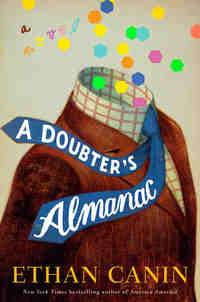
A Doubter's Almanac by Ethan Canin

Published by Random House on February 16, 2016

The first third of A Doubter’s Almanac tells the story of Milo Adret. The rest of the novel is a father-son story. The middle bounces around in time a bit, but it focuses on a key summer in Hans Andret’s early teen years, the last summer he will spend with his father. Hans is an adult with a family of his own in the last third. The heart of the novel involves the drama of being in the family of a broken genius, a man who cannot conform, who cannot stop dreaming, who cannot put his family’s needs ahead of his own. The significant question is whether the son is destined to follow the father’s path.

Milo has an unnaturally strong spatial sense (sort of a built-in GPS) and a natural affinity for math. As a child, Milo carves a chain out of wood just to prove that he can. With mediocre grades in humanities and social sciences, Milo ekes out a college degree and finds a career pumping gas before he is lured into graduate school at UC-Berkeley. With the help of a mentor, but primarily due to a drive he cannot define, he tackles one of the toughest problems in mathematics and wins a Fields Medal.

Everything Milo gains -- prestige, a professorship at Princeton, a family -- he will eventually place at risk, because he is a slave to his addictions and compulsions. There is always another challenge, and eventually one will come along that cannot be solved, or that a competitor will solve first. As Milo sums it up, mathematicians are defined by their understanding of their own ignorance. “Ignorance and wounded shrieking.” Whether Milo will be destroyed by his shrieking obsession to overcome ignorance is a question that the reader asks from the novel’s first page.

Hans and his sister Paulette inherit Milo’s spatial skills and intuitive understanding of mathematics. Hans uses that skill as one of the first mathematicians to revolutionize hedge fund trading. Hans also seems to inherit some of his father’s weaknesses. Like father like son? One of the most absorbing questions that faces the reader is whether and how Milo can break his father’s mold.

Every now and then a revelation comes along that requires the reader to rethink one of the characters. And every now and then characters pause to reevaluate themselves, to question their decisions and the direction of their lives, as most thinking people do. Like Milo, we ask ourselves what really matters. Probably we’ll never know, but those who spend their lives obsessing about a goal (whether it’s wealth or professional achievement or the solution to a mathematical puzzle) are likely to conclude in the end that they failed to pursue the things that matter.

An explosive scene -- a scene in which the family explodes -- about two-thirds of the way into the novel captures every family dynamic that underlies the story: love and hate; self-loathing projected to other family members; communication that vacillates between ineffective and all-too-effective; confrontation and avoidance; acceptance and rejection. It is an intense, gut-wrenching moment in a family’s life. And yet its aftermath is just as telling. The four members of this family may not understand each other at all, but in many ways, they understand each other perfectly.

Late in the novel a doctor says, “We never rightly understand the existence of another, do we?” I think that is the central point of A Doubter’s Almanac. The mind is a mystery and we are nothing but our minds. Whether we can comprehend our own existence is doubtful; truly understanding another person is beyond us. At best, we can accept and appreciate others. But the impossibility of complete knowledge does not stop us from learning more about others, about ourselves, about the world. We “grow wise in increments.”

Ethan Canin’s prose is elegant. He writes lovingly of the indefinable nature of time. He conveys the beauty of math to those of us who fought a losing battle with trigonometry. But it is the beauty of the mind, each so different from every other -- the beauty even (perhaps especially) of minds with eccentric wiring, even of the wasted ones -- that he captures so perfectly. “Beauty prefers truth,” Milo says. Canin quotes Descartes’ adage that a seeker of truth must doubt all things. A Doubter’s Almanac is rich with beauty and truth.

HIGHLY RECOMMENDED
Wednesday
Nov042015

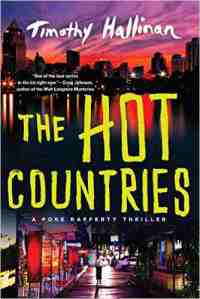
The Hot Countries by Timothy Hallinan

Published by Soho Crime on October 6, 2015

“We all need friends at times. Doesn’t much matter who they are.” That’s just one of the truths spoken in The Hot Countries, the latest and best of the Poke Rafferty novels. Poke’s friends -- people he might have identified as acquaintances rather than friends before this novel -- are the key to this novel’s success.

Timothy Hallinan writes circles around a number of more popular thriller writers who are just phoning it in. I have never been disappointed by a Hallinan novel. Hallinan’s Junior Bender series is fun, but his Poke Rafferty series probes the human character in greater depth.

In The Hot Countries, Hallinan focuses on aging collateral characters who no longer have a purpose in life and seem incapable of searching for one. Hallinan is a master at writing about people living in emotional pain, people in a state of decline, people who have lost themselves. Fortunately, he balances the darkness with humor and with glimpses of human decency.

Arthur Varney shows up in Bangkok looking for Poke Rafferty. Varney wants something from Poke, maybe a couple of things, both relating to people and events found in The Fear Artist and For the Dead. Like all Poke Rafferty novels, however, The Hot Countries can easily be read as a stand-alone.

One of the strongest characters in The Hot Countries (other than Poke) is an old veteran named Wallace who has been destroyed by love more than war. Seeing Varney takes Wallace into his tortured past, giving Hallinan a chance to tell the veteran’s story. A couple of other strong characters are children, particularly Treasure, a girl who has suffered a violent life, some of which was detailed in earlier novels. She’s a kid who is dedicated to survival, but during the course of the novel, circumstances cause Poke to wonder whether he has misjudged her.

Hallinan has a gift for describing Bangkok, from the fat raindrops to the grim tourists and grizzled expats who choke its streets. He also has a strong grasp of Thai people and culture, of bar girls and the foreign customers who never bother to probe beneath the smiling fantasies that occupy a week or two of their lives. Hallinan’s prose is descriptive, fresh, and engaging, but it’s also honest. He describes Poke (a travel writer) as staring at his laptop “as he tried to find his way to a sentence he believed.” I love Hallinan’s novels because, unlike so many current crime writers, Hallinan always writes sentences I can believe.

Astute observations of human nature combine with escalating tension in a novel that is alternately chilling and moving. The ending couldn’t be better. The Hot Countries is exactly what a thriller should be -- a novel about the triumph of the human spirit that features ordinary people in threatening situations who reveal their strengths and flaws as they strive to overcome adversity. It is the best novel I’ve read by Hallinan. He is now permanently enshrined as one of my favorite contemporary crime writers.

HIGHLY RECOMMENDED

Monday
Aug172015

Fishbowl by Bradley Somer

Published by St. Martin's Press on August 4, 2015

Fishbowl is "a glimpse into the box" that is called the Seville on Roxy. The box contains "the perpetual presence of life itself."

We are told in chapter 2 that Ian the goldfish will plunge from a 27th floor balcony in chapter 54. We are also told that Troy the snail, who stays safely in the bowl, lives the kind of uneventful life that usually assures dull longevity, while Ian is an adventurer who has always yearned to go beyond the limits of his fishbowl. Is it better to die as "an old fish without one adventure had"? Of course not. Ian is no snail.

The story's main characters are people, which is fortunate since Ian, while a pleasant goldfish, doesn't have much personality. Katie is Connor Radley's girlfriend. Katie falls in love quickly and often, usually with the wrong men. Connor clearly falls into the "bad boyfriend" category, as most of his multiple sex partners understand, but maybe he has unmined depths. Or maybe not.

Conner lives in the Seville, as do the other main characters: Jiminez the super, Petunia Delilah the pregnant woman who is about to give birth, Garth the construction worker who can't wait to transform himself with the contents of a mysterious package, Claire the "aggressively introverted" (not to say agoraphobic) shut-in who gets paid for phone sex, and Homeschooled Herman who suffers from blackouts that he regards as proof of teleportation and time travel.

The main characters are tied together not just by their residence in Seville but by the failure of both elevators to function properly for the half hour during which the story takes place. In a series of short chapters, the narrative jumps from character to character (including, occasionally, Ian). As Ian falls, we are treated to brief descriptions of the lives of apartment dwellers (main characters and others) as he plunges past their windows.

The Seville is a building full of lonely people who, in different ways, don't quite know how to connect with the world. Some of them become a little less lonely by the novel's end. Others become a little lonelier but they learn about themselves in the process. Some learn that overcoming loneliness requires "an uncomfortable exposure to let oneself be true in the presence of another."

The characters are all struggling to give definition to their lives. They want to be happy. They aren't certain how to accomplish that end but they know that things need to change. To a large extent, Fishbowl is about finding the courage to change a life, to find yourself while finding the freedom to be yourself.

The story is very funny but it is also sweet and occasionally touching in ways that are both genuine and original. It is also a smart and insightful look at how people can have multiple identities at the same time, each of them real, all of them assembling into a complicated and contradictory whole. Fishbowl is a wonderful novel of birth and death and everything in between, all revealed in a thirty minute glimpse into a box that "fills up with infinitely thin layers of experience," layers so thin that there will always be room for the box to hold an infinity of new and eventful experiences as its residents live their separate lives together.

HIGHLY RECOMMENDED

Monday
Aug032015

The Casualties by Nick Holdstock

Published by Thomas Dunne Books on August 4, 2015

The Casualties is a pre-apocalyptic novel more than it is a post-apocalyptic story. While the story is told from 60 years in the future, it begins in the past (our near future) because history teaches that "everything is determined by what came before." The novel's structure sets The Casualties apart from typical post-apocalyptic novels because, although we are immediately and frequently forewarned that a near-extinction event on three continents is coming, the story focuses on the lives and activities of an eccentric group of people in the Comely Bank neighborhood of Edinburgh during 2016 and 2017, before the apocalypse occurs.

From the narrator of The Casualties (whose identity the reader deduces from hints as the novel progresses), we learn that Sam Clark, manager of a charity bookshop, learned about people from the books they donated and from the ephemera they left in their pages (ticket stubs, pictures, letters). A man named Alasdair who lived under a bridge owned few possessions because possessions make people unhappy -- except a stranger's old photo album that he cherished until he didn't. Caitlin, who had a horrible skin condition that isolated her from the world, had a crush on Sam. Sinead, a goth who has abandoned promiscuity in favor of celibacy coupled with obsessive self-gratification, had sexual fantasies about Sam. Unfortunately for Caitlin and Sinead, Sam was too terrified of reproduction to have sex with anyone.

Other odd characters of Comely Bank include an obese man whose hunger seems to be partially satiated by watching cooking programs, the caretaker who tests that phenomenon experimentally, a woman who writes letters to a dead man, an alcoholic couple, a Filipina prostitute, and a Pakistani shopkeeper who feels unwanted in Comely Bank. No writers do "eccentric" as well as those from the British Isles, and Nick Holdstock is a worthy heir to that tradition.

A part of the plot deals with old black-and-white photographs (reproduced in the book) from the 1920s to the 1950s. If everything is determined by what came before, those pictures tie the past to the present. A challenging amalgamation of past and present in the last pages drives that point home.

The Casualties is about the need to understand others, to avoid judgment of lives we have not lived. It is about living with the past while living in the present. It is about "admitting the faults of the dead without saying that they deserved to die." It is about transformative experiences and how their occurrences are so often unexpected and seemingly random. It is about the relationship between the past and memories of the past. It is about "me" being a succession of selves defined by memories (selves that would be different if lost memories could be restored). It is about moving on when plans and expectations are shattered. It is about how everything that happens is determined by what came before.

Apart from a brief visit to 2047, it is only at the novel's midway point that we learn anything meaningful about the apocalyptic event. Most post-apocalyptic novels assume than an apocalyptic event is a bad thing. This one assumes that it is a bad thing for the 2 billion people who die but ultimately a good thing for the 5 billion who survive. That's a remarkably fresh take on a tired genre that, while not the novel's focal point and thus not fully explored, is yet another fascinating notion that makes The Casualties worth reading.

Since the story deals with contemporary, pre-apocalyptic lives, The Casualties might be a good science fiction novel for readers who don't really like science fiction. On the other hand, it might be a bad novel for readers who think post-apocalyptic fiction should be about zombies chewing on non-zombies or scavengers killing each other as they fight over scrap metal. Setting aside genres and expectations, I would say The Casualties is a worthwhile novel for any reader who enjoys strong characters, provocative thought, and a memorable mixture of humor and drama.

HIGHLY RECOMMENDED

Monday
Jun082015

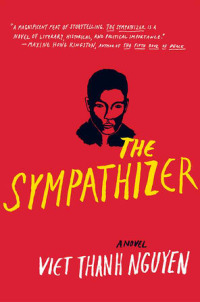
The Sympathizer by Viet Thanh Nguyen

Published by Grove Press on April 2, 2015

A central theme of The Sympathizer is betrayal. From one perspective, the Communists betrayed the Vietnamese by promising independence and delivering poverty. From another perspective, the Americans betrayed the Vietnamese by promising liberation and delivering abandonment. Various characters in The Sympathizer betray their countries, their causes, their friends, and their selves. Some betrayals are political, others involve love, but all are betrayals of the heart and soul.

The Sympathizer tells a riveting story in elegant, clever prose. The novel begins at the end of the Vietnam War. Saigon will soon fall. The South Vietnamese president has fled to Taiwan. Americans have tired of supporting a war that cannot be won. The American government botched the final days of the war as badly as it botched the war itself, leaving behind thousands to whom transportation out of the country had been promised.

The Captain arranges an evacuation for the General he serves and some other lucky officers. Unbeknownst to the General, the Captain also serves as a Communist spy. He narrates the story from a prison cell, some years after the war's end. His narrative is his confession of guilt, but only near the novel's end do we learn why he is writing it.

After a harrowing evacuation to a refugee camp in Guam, the Captain is sent to America. As a beneficiary of American "aid" that cost him his country and nearly his life, he is understandably suspicious of the Amerasian life he is expected to live. Eschewing fish sauce in an effort to blend in, the refugees are divided and flung across the American map, the better to prevent them from organizing or benefitting from mutual support. The General's task in the United States is to assemble a ragtag Army that will renew the Vietnamese battle against Communism with the unspoken support and secret funding of certain American politicians and organizations.

Drawing upon sources as diverse as Ben Franklin and Mao, the Captain contrasts American and Vietnamese politics and culture. A job in the movie industry, where he makes futile efforts to educate filmmakers about the reality of life in Vietnam, gives the Captain a chance to reflect upon western stereotypes of Southeast Asians and the Americanization of the world.

While the Captain contemplates America's substitution of image for reality, he struggles to come to term with his own identity crisis. Thinking back to the life he left behind -- a life in which he pretended to serve one cause while aiding another -- the Captain wrestles with the clash between East and West and, in Vietnam, between North and South. He is torn between his longing for Vietnamese village life and his appreciation of flush toilets, TV dinners, and obedience to traffic lights.

In a life that is characterized by betrayal, one in which he has been the betrayer and the betrayed, the Captain's most difficult moments come when he is asked to betray his friends in order to maintain his anti-communist cover. The Sympathizer is not meant to be a thriller, but it creates dramatic tension in the moral dilemmas that the Captain repeatedly confronts. A plausible surprise near the end underlines the story's key theme. Much of the tone is light but powerful moments that reveal the horror of war from the Vietnamese perspective (North or South being irrelevant to horror) give the story its moral force.

While The Sympathizer is about betrayal, it is also about the corruption of ideals -- American ideals, French ideals, communist ideals, all extolling freedom and independence while denying those gifts to Vietnamese villagers who are never free to think and act in ways that offend their "protectors." While the novel is tangentially about the aftermath of the Vietnam War, its strength lies in its honest and complex examination of human nature, its recognition that people, regardless of national origin, are at once cruel and compassionate, cynical and hopeful, weak and strong, guilty and exonerated. Written in perfectly pitched prose, The Sympathizer works on every level: the story is fascinating, the characters are multidimensional, and the themes are profound.

HIGHLY RECOMMENDED

Page 1 ... 3 4 5 6 7 ... 15 Next 5 Entries »