The Tzer Island book blog features book reviews written by TChris, the blog's founder.  I hope the blog will help readers discover good books and avoid bad books.  I am a reader, not a book publicist.  This blog does not exist to promote particular books, authors, or publishers.  I therefore do not participate in "virtual book tours" or conduct author interviews.  You will find no contests or giveaways here.

The blog's nonexclusive focus is on literary/mainstream fiction, thriller/crime/spy novels, and science fiction.  While the reviews cover books old and new, in and out of print, the blog does try to direct attention to books that have been recently published.  Reviews of new (or newly reprinted) books generally appear every Monday, Wednesday, and Friday.  Reviews of older books appear on occasional weekends.  Readers are invited and encouraged to comment.  See About Tzer Island for more information about this blog, its categorization of reviews, and its rating system.

Entries in HR (69)

Monday
Nov112019

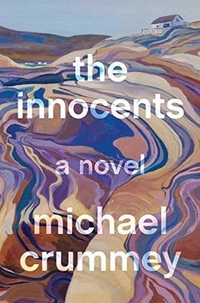
The Innocents by Michael Crummey

Published by Doubleday on November 12, 2019

The Innocents tells a powerful story of a brother and sister, orphaned and young, alone together, who withstand the threats of nature while trying to make sense of a world they are ill-prepared to understand. The man-against-nature theme is coupled with the theme of innocence and the potential misfortune that accompanies ignorance.

A boy named Evered Best, his sister Ada, and their parents live alone on the Newfoundland coast. They capture seals and catch fish, trading their catch for supplies that are delivered by a ship that only appears once a year. Illness takes the mother one winter and the father soon follows, leaving the children alone in the world. They have rarely met another person. Mary Owen in Mockbeggar, a day away by rowboat, helped their mother deliver a baby named Martha who died in infancy. She was their only point of contact with the outside world.

When spring comes, their supplies are nearly gone and the children are not sure how to go about assuring their survival. They have never left home and have nothing but each other to rely upon. Evered wasn’t old enough to visit the supply ship so he doesn’t know what to expect when it next appears. The ship’s captain is a former church official who might be cheating the Bests — he claims they never trade enough fish to pay the debt they owe for supplies — but he doesn’t seem like a ruthless man. Yet Evered is “just a youngster playing at being a man” who fears that he might not have what it takes to follow in his father’s footsteps, even if the captain is generous in his extension of credit.

While all of the novel’s characters live the hard lives of workers who scrape out an existence, they are all fundamentally decent. The captain wants the children to survive, as do a couple of other helpful people who encounter the children during the course of the story. One of those is a traveler named John Warren, who shows kindness to both Evered and Ada, although Evered isn’t sure that Warren can be trusted with Ada. At the same time, he isn’t sure what not trusting a man with a woman might entail.

The story is one of hardship and hard work that children should scarcely be able to endure. Their discovery of a shipwreck and the horrors it contains frightens them even more than Ada’s first menstruation. A story that a sailor tells about an evil deed done by a man Evered suspects was his father introduces another element of uncertainty into their shifting world.

The story bases much of its drama on the innocence of the two children as they move from preteens to their teen years without learning anything about life beyond survival skills. As they huddle together for warmth at night in their unheated cabin, Evered and Ada both feel the unspoken shame of Evered’s erection. “Shame and pleasure,” Ada thinks, “were the world’s currencies.” They don’t understand the urges they feel — they have no concept of how babies are made — and the reader fears the potential consequences of their innocent ignorance.

The brother and sister would die for each other, yet they hardly know how to confide their fears. Evered’s suspicions about Warren seem to change him, Ada thinks; “she was beginning to suspect a person might not be one simple thing, uniform and constant.” Perhaps they are not enough for each other. “They had all their lives been the one thing the other looked to first and last, the one article needed to feel complete whatever else was taken from them or mislaid in the dark.” One of the key dramatic questions is whether they brother and sister will spend their entire lives together in their isolated cabin, or whether they might look for something more, perhaps in Mockbeggar or even the more distant places that they cannot begin to imagine.

Apart from the intensity of its characterizations, The Innocents is remarkable for its creation of a sense of place. The dangers of isolated living — the threat posed by bears, steel traps capable of breaking a hunter’s leg, unexpected storms that could sink a rowboat, ice that might give way while hunting seal — are illustrated in vivid detail. There is always some vague horror lurking on the horizon, but the greatest horror comes from what Evered and Ada, in their innocence, might do to each other. In that regard, The Innocents combines all the hallmarks of a literary novel with the tension that accompanies a thriller.

HIGHLY RECOMMENDED

Friday
Jun142019

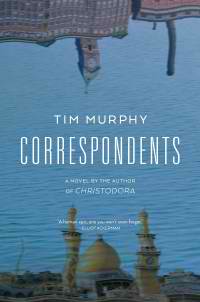
Correspondents by Tim Murphy

Published by Grove Atlantic on May 15, 2019

I hate to use a book review cliché like “riveting,” but it fits. Correspondents tells a story that is intensely personal, while illuminating larger social, cultural, and political conflicts that have come to define America. The novel also brings to life the pain that America brought to Iraq and to its refugees when it bungled an invasion that was conducted under false pretenses, an invasion that was intended solely to advance American interests, not the interests of Iraqis.

Most of the novel covers a span from 2002 to 2009, but the story begins as a generational saga centered on the fictional Massachusetts town of Lawton, described as a melting pot that draws immigrants who work in mills so they can send wages to the families they left behind. The first chapter introduces the ancestors and siblings of Mary Jo Coughlin (a Catholic from Ireland) and George Khoury (a Lebanese Maronite), while the second describes their lives in the 1960s and 1970s. The third chapter, set in the 1980s, introduces their brainy and ambitious daughter Rita and her cousin Bobby, a descendent of the Coughlin branch. In a 2008 prologue, Rita brings her Jewish boyfriend Jonah to a Mahrajan in Lawton.

All of that is background to a larger story that begins in Iraq in 2002, where Nabil is a young man who is desperate to make a good life. His cousin is Asmaa, a bright and restless woman who teaches Nabil English. Both want life to change, but Nabil, unlike Asmaa, is not sure that it will change for the better if America invades the country.

Rita is in Beirut in 2002 as a Harvard-trained foreign correspondent. Bobby has enlisted in the military as a response to 9/11. As the invasion of Iraq seems imminent, Rita gets her career-making wish and is sent to Iraq to cover the war. Nabil is her warzone interpreter. Bobby is later sent to Iraq to assist with the occupation.

Most of the story takes place in Iraq after the fall of Saddam Hussein. Rita’s interviews reveal the mess that America made. The plan to win the hearts and minds of Iraqis was sabotaged by the indiscriminate bombing of neighborhoods, the mass incarceration of innocent people, and the failure to implement a post-invasion strategy to control the chaos of looters, car thieves, and random killings. All of that is depicted in vivid detail. The notion that deposing Saddam made Iraq free is debunked by characters who tell Rita that they are no longer free to walk on the streets without fear of being killed.

Americans learned some of that from journalists who were allowed to report the story, but as the novel suggests, many American journalists pulled their punches in the immediate aftermath of the supposed “victory.” Only later did they report the hypocrisy of imposing American-style democracy by force on people who were not allowed to decide for themselves whether they wanted a democracy. Almost two decades later, Iraq is still unstable, thanks to American interference with the country's governance. Rita’s realization that American foreign policy is toxic is one of the novel’s strongest moments.

The story is filled with dramatic moments, some involving Rita, others advancing Nabil’s story. One of the later chapters, set in the United States shortly before the 2008 election, focuses on a birther with mental health issues and a newly purchased gun, whose actions lead to a tragic moment that has an impact on Rita, Bobby, and the nation. The last few chapters touch upon important issues involving gun control (or its absence), PTSD, the darkness the pervades the lives of war survivors, the difficulty that refugees have while transitioning to American life, and the love of country (which many Americans can’t seem to fathom when the country isn’t their own).

Correspondents is smart, nuanced, and powerful. A key moment occurs when Rita inadvertently reveals the truth as she sees it — not a “balanced” story about post-invasion successes and failures, but an unvarnished, personal account of how devastating the invasion had been to people who, in its aftermath, lived in daily fear of kidnappers, looters, car bombers, and retribution. Correspondents dramatizes how journalism lost its way by refusing to report the truth from Iraq for fear of appearing biased, as if enabling propaganda by uncritical reporting of an administration’s statements is not itself a form of biased reporting. It tells that story — and the story of the war’s impact on Nabil and his family — in scenes that are all the more moving because of their realism.

HIGHLY RECOMMENDED

Friday
Apr122019

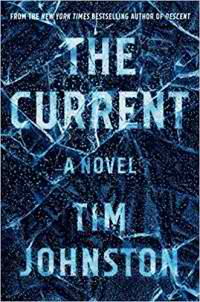
The Current by Tim Johnston

Published by Algonquin Books on January 22, 2019

The lives of two young women, separated by more than a decade, intersect in The Current. One drowned in a river, but may have the victim of a crime before entering the water. Years later, the other woman nearly drowned in the same river. The second woman was a child when she saw the scene of the first woman’s death. Those fateful connections form the backbone of The Current, a literary crime novel that explores the impact of grief and resentment on characters who have little success coping with their losses.

Audrey Sutter (from Minnesota) and Caroline Price (from Georgia) are in their sophomore year at a Georgia college. Audrey needs to return home after learning her father, retired Sheriff Tom Sutter, is ill. Caroline impulsively decides to escape the magnified dramas of her life by driving Audrey home. Audrey is attacked in Iowa but Caroline rescues her from a probable sexual assault. Audrey and Caroline flee and are almost in Minnesota before ambiguous circumstances send the car into a river.

Gordon Burke’s daughter drowned in the same river years earlier. Burke has always carried a hatred for Sheriff Sutter for failing to arrest Danny Young, who was suspected of causing her death. That possibility ends Gordon’s relationship with Rachel Young (the widow of Gordon’s former business partner) and ends his friendship with Danny’s developmentally disabled brother Markey.

Much of the drama in the novel’s first half centers on Gordon, Tom, and Audrey. As the novel nears its midpoint, the focus shifts to Danny, who comes home to a town that does not welcome his return. Not even his old friend Jeff Goss, who appears to know more about the death of Gordon’s daughter than anyone except Danny, and who does not want Danny’s return to stir up the truth.

Palpable drama flows from a series of revelations as characters come to grip with new evidence of events that took place years earlier, as well as events surrounding the attack on Audrey. Characters are true to their midwestern small town roots, often struggling with emotions and frustrated by their sense of helplessness. Through dialog alone, without needless exposition, Tim Johnston conveys how difficult it is for Gordon to express himself.

As for the plot . . . I hate to use clichés like “riveting,” but I can’t think of a better word. The story is absolutely riveting, in part because the characters are so true-to-life and the description of their actions is so convincing. It’s a sad story but it’s sad because it rings true. It is a story of small town lives ruined by small men, men who “run all over the world like rats,” men who behave horridly and men who don’t speak up and put a stop to it.

Tension builds with such urgency in the second half that the book feels like a heavy weight pressing against the reader’s chest. The tension is created in part because of the story’s ambiguity. A man who might have attacked Audrey in Iowa faces extra-judicial punishment, but is he the guilty man? Another character is clearly guilty of certain crimes but is he responsible for Caroline’s death? Characters develop theories, they think they know what might have happened, but as is often true in life, nobody is really sure. They might convince themselves that they know, but in moments of honest reflection, they don’t know who is guilty and who is innocent. The story’s ambiguity reflects the real world, where so many crimes go unsolved and so many innocent people are falsely accused.

Ultimately, the story is about maintaining empathy in an uncertain world. Audrey feels the heart of Gordon’s daughter beating in her chest. Gordon once wished harm upon Audrey so her father would know the pain he felt, but when he gets to know Audrey, he understands how wrong he was to wish harm upon the innocent. The Current teaches the valuable lesson that justice and punishment are less important than understanding and healing.

HIGHLY RECOMMENDED

Friday
Feb152019

This Shall Be a House of Peace by Phil Halton

Published by Dundurn on February 5, 2019

This Shall Be a House of Peace is a remarkable novel that imagines the birth of the Taliban as a social movement in Afghanistan. Over a relatively short span of time, the novel chronicles the transformation of a Mullah from a simple man who teaches the Quran to children in a madrassa to a warrior who makes it his mission to bring peace and justice to Afghanistan, a country where authority “stemmed from the barrel of a gun.” The Mullah is determined to make Afghanistan “a land under Islam, and a house of peace.” To create a house of peace, he paradoxically declares a violent war against all men who fail to “submit the will of God” as the Mullah interprets that will.

The novel takes place shortly after the withdrawal of Soviet forces from Afghanistan. The Mullah fought against the Soviets as a mujahid. Now he lives a quiet life, feeding and sheltering orphans in a madrassa while teaching them the word of Allah. The houses near the madrassa have been abandoned and the few villagers who live nearby are plagued by bandits. The Mullah initially protects his students and then is asked to protect the village. As a spiritual leader, he provided guidance and recruits men with practical skills that will allow the village to grow and flourish. But as word of his success spreads, the Mullah, his madrassa, and the village become the target of wealthy criminals (the modern version of warlords) who do not appreciate the Mullah’s efforts to resist their “road tolls” and other forms of thievery.

The Mullah confronts difficult choices: should he ally himself with criminals to protect his followers from bandits or is the loss of righteousness too heavy a price to pay in exchange for peace? The novel suggests that Afghanis who are educated or pious are also detached from the real world, in that prayers and education and righteous living do not change the behavior of warlords and bandits. Setting an example does not prevent chaos and mayhem. So should the righteous man take up arms to improve his part of the world, or is it best “to be content and solid in one’s place”? That is the moral conflict that drives the plot.

The plot, by the way, is excellent. While the novel is important because of the light it sheds on the motivations that might have given birth to the Taliban and similar movements, This Shall Be a House of Peace tells a riveting story. The characters, ranging from the Mullah’s students to members of a nomadic tribe, from frightened villagers to duplicitous landowners, give the Mullah a surrounding cast that readers can alternately cheer and despise.

The atmosphere, including tribal customs and perceptions of how life should be lived, is impressively detailed without ever becoming pedantic. Cultural events, such as camel fights and a jirga (sort of a town hall meeting), are fascinating. The novel explores local politics (as in every culture, a struggle for power) and the stupidity that leads to disputes (their sheep are drinking our river water; they cast an evil eye on our daughters). In every society, it seems, there are men who are only happy when they are shouting at each other.

The story works on a number of levels, combining aspects of a thriller with historical fiction while providing a detailed anthropological examination of life in Afghanistan. The simplicity and quick pace of the narrative mask the story’s complexity, making it the kind of book that merits a second reading.

There are too many takeaways from This Shall Be a House of Peace to discuss in detail, and in the novel’s richness, each reader is likely to find something that others will miss. The novel illustrates the ease with which adherents to a religion can interpret religious teachings in whatever way seems most convenient. The Mullah believes in peace and justice within the parameters of “the will of God,” but anyone who rejects the teachings of Islam, as the Mullah understands them, has rejected the will of God and forfeited the opportunity to be treated with mercy. The notion that “all men are brothers” quickly becomes “all men of whom we approve are brothers.” When another Muslim rejects violence and says, “My faith is telling me something different from yours, perhaps,” he encapsulates the tension between believers who interpret the same text in fundamentally different ways. One lesson I derived from the novel is that people who believe they can discern and carry out “the will of God” based on an ancient text should be more humble about their ability to know the unknowable.

At the same time, the Mullah’s cause often seems just, given that his enemies are bandits and warlords who use violence to extort what little wealth others might have, men who rape young girls under the guise of marrying them before casting them aside. What the Mullah views as religious justice, others might see as freeing a people from their oppressors. Yet the Mullah approves of forced marriage of young girls, approves of oppressive rules that require women to cover themselves in a challah from head to toe, approves of destroying the shop of a man who sells Bollywood DVDs, and approves of an “eye for an eye” philosophy that is tempered by the quaint notion that payment of a negotiated “blood price,” if accepted by the victim’s family, will allow a murderer to avoid punishment. What seems like a fundamentalist reading of the Quran to some will be regarded as a warped and antiquated view of Islam by others — just as competing interpretations of religious texts produce clashes within every religion.

A reader might admire the Mullah’s dedication to ridding his country of evil, if not for the knowledge of the evil that the Taliban later visited upon innocent people who do not share their understanding of the will of God. A reader is much more likely to admire Phil Halton for crafting a novel that so carefully imagines how the lawless conditions in Afghanistan and longstanding suffering of its people could spark the rise to power of religious leaders who support violence against the people they define as infidels. By casting the Mullah in sympathetic albeit realistic terms, Halton offers insight into the old adage that one person’s terrorist is another person’s freedom fighter by illustrating how violence might be viewed as justifiable in a society where ordinary people are motivated to fight against the violence that oppresses them daily. Shaking up one’s understanding of the world is what good literature should do, and This Shall Be a House of Peace does that in memorable ways.

HIGHLY RECOMMENDED

Wednesday
Jan232019

Talk to Me by John Kenney

Published by G.P. Putnam's Sons on January 15, 2019

“I made a mistake. I apologized.” Why isn’t that enough? Ted Grayson, a long-time network anchor, asks that question after a bad birthday leads to a moment of bad behavior. The aftermath spirals out of control. The incident says something about Ted but it does not reflect a pattern of behavior. Balanced against a distinguished twenty-year career, the incident seems, if not trifling, at least an aberration. Should Ted be fired? I don’t know. And I like the fact that Talk to Me presents that question in a way that allows the reader to consider the pros and cons without demanding a knee-jerk decision.

Ted is depressed because nightly news anchors are unimportant in the internet age. He feels he is “a vapid, empty shell of a person, with no real relationships and little to no integrity” who had “given up long ago on being a journalist.” Ted lives entirely inside his own head, which is not a pleasant residence. He substitutes petulance for an expression of honest feelings. He loves his wife and daughter and he shows his love in his own way, but it isn’t in him to give them the constant attention and affirmation they crave. He is far from being a sociopath, but he has never been good at empathy or kindness. His ability to distance himself from life is why he can be an objective news anchor.

Ted’s wife, Claire, offers a first-person soliloquy about marriage and the (in her view) inevitable deadening of spirit caused by accumulated years of monogamy. She wants to be the only priority in her husband’s life despite enjoying the fruits of his demanding career. She doesn’t want to recognize that the new man she met after all those disappointing years, the one she’s counting on to save her life, is just another man who will inevitably fail to meet her long-term demands. But he’s happy and attentive, at least for the moment, and Ted isn’t, so that makes the new guy attractive. It is easy to see Claire’s point of view, just as it is easy to understand Ted’s.

Ted has a meltdown on his birthday during a commercial break. He calls a young intern a Russian whore because she has broken his rule against standing in his line of sight. She is actually Polish and has given Ted no reason to question her character. In true corporate fashion, the network fires the intern because she responded by giving Ted the finger. But the network is old media and it doesn’t realize that everything that happens in the world is captured on someone’s cellphone video and eventually ends up on Facebook or YouTube, where privileged men who never stopped being frat boys will laugh at it while decent people will be appalled.

The story, as they say, is drawn from the headlines, but unlike Matt Lauer or Bill O’Reilly, Ted does not have a history of abusing women. His wife doesn’t like Ted much, but she knows he’s not a misogynist. He’s just a guy who is coming apart at the seams. The reader is therefore left to wonder whether an uncharacteristic but ugly incident of inappropriate language should cost Ted his job. I assume different readers will have different opinions, which is one of the reasons Talk to Me tells such a fascinating story.

In fact, while Ted is plagued by his own demons, the novel refuses to demonize him. His teenage daughter is a mess, but the extent to which Ted is to blame is unclear. Ted might behave like an asshole, but doesn’t act like a privileged asshole despite the wealth and prestige that comes from being a network anchor.

The novel contrasts old media with internet reporting by introducing Henke Tessmer, whose website operates on the principle that objective truth is unimportant. Clicks are important. Clicks generate advertising revenue. The more outrageous a story might be, the more clicks it will receive. Responsible journalism, according to Tessmer, is a thing of the past. Website owners make their own rules. Adults should take responsibility for deciding whether a story is true, a view that leaves Tessmer’s website free to disguise click-bait lies as news. Clickeat emptor is Tessmer’s motto.

Ted’s daughter Franny works for Tessmer. Her reaction to the viral video of her father — and Tessmer’s request that she write a story about it — kicks off another plot thread that will contribute to Ted’s destruction. Claire’s reaction to the video kicks off another. None of the characters in Talk to Me are entirely sympathetic — Claire and Franny are intensely focused on their petty complaints about Ted and seem oblivious to the harm they have caused him — and none are without fault.

The novel touches on a variety of timely issues. Misogyny. Underrepresentation of women in the news media. The clash between free speech and morally offensive speech. Whether hecklers should be empowered to prevent people they dislike from explaining their actions. Whether campuses should disinvite unpopular speakers in response to student or faculty protests. Whether there are, or should be, any rules in the age of the internet. Whether social media, designed to promote interaction, has ironically raised the heat level of discourse to a degree that makes it impossible for people who disagree to talk to each other. Whether society is now so sanctimonious that none of us are allowed to make a mistake. Whether the collective willingness to forgive mistakes has been lost because the internet has become a permanent, easily accessed record of those mistakes. Whether self-righteous commentators and bloggers will never forgive because, secretly, they are happy that their own secrets have not been exposed.

The story tells some hard truths about redemption. It might be desirable but, contrary to what we are told in novels and movies, it isn’t always possible. Not every broken relationship between child and parent can be repaired. “Because with enough pain, with enough time, we close the door on those people and we do not let them back in.” Yet some people in the novel, generally broken people or people who are recovering from broken lives, find it possible to feel empathy for Ted, and the story suggests that in the end, forgiveness might still be the best response to sincere remorse.

Talk to Me occasionally depicts political correctness in a way that is unnecessarily exaggerated. There were times when I had the suspicion that John Kenney was trying to soft-peddle headline-grabbing misconduct that clearly merits the termination of employment by equating Ted’s transgression with talking heads who engaged in a long pattern of sexual harassment. On balance, I think Kenney took care not to do that. There are lines that need to be drawn and I don’t think Talk to Me suggests otherwise. It does suggest that not all misconduct deserves the equal condemnation that it so often receives.

There are also times when Talk to Me gains power through exaggeration. I didn’t quite buy Claire or Franny, two good people who, at times, behave atrociously toward Ted, knowing that he doesn’t deserve to lose everything important in his life while contributing to his loss. That seemed a bit over the top, but it also adds layers of drama to the story’s depth.

Bad actions should have consequences, but people generally deserve forgiveness. How can those competing values be reconciled? I don’t know the answers to the most difficult questions that Talk to Me asks. I appreciate the fact that Kenney asked them because the questions are important. I also appreciate that he asked the questions in elegant prose that he used to tell a fascinating story.

HIGHLY RECOMMENDED