The Tzer Island book blog features book reviews written by TChris, the blog's founder.  I hope the blog will help readers discover good books and avoid bad books.  I am a reader, not a book publicist.  This blog does not exist to promote particular books, authors, or publishers.  I therefore do not participate in "virtual book tours" or conduct author interviews.  You will find no contests or giveaways here.

The blog's nonexclusive focus is on literary/mainstream fiction, thriller/crime/spy novels, and science fiction.  While the reviews cover books old and new, in and out of print, the blog does try to direct attention to books that have been recently published.  Reviews of new (or newly reprinted) books generally appear every Monday, Wednesday, and Friday.  Reviews of older books appear on occasional weekends.  Readers are invited and encouraged to comment.  See About Tzer Island for more information about this blog, its categorization of reviews, and its rating system.

Entries in HR (71)

Tuesday
Dec212010

Home Run by Gerald Seymour

Published by The Harvill Press on May 30, 1989; published in the US in 1991 under the title The Running Target

Writers of espionage novels are inevitably compared to John Le Carré, particularly if the writer is British. Gerald Seymour's writing style isn't as polished, and the characters in Home Run lack the multi-layered depth of Le Carré's best characters, but the plot and pace of Home Run are worthy of the master.

Home Run begins with the 1982 execution of a teenage girl in Iran. The rest of the novel takes place several years later. Point of view shifts frequently as two storylines unfold. One concerns a drug investigation that follows the death of a 19 year old heroin addict who overdosed. Her father, an important public official, pressures the police to make the heroin importer's arrest their top priority. The cops diligently pursue the task, grumbling all the way. The other story focuses on Matthew ("Mattie") Furniss, Head of the Iran desk at the SIS, who is being pressured by the new Director General to increase the quality of intelligence coming out of Iran. Fortunately, Furniss has cultivated a new Iranian spy, a family friend who happens to be the brother of the girl who was executed.

Home Run gets off to a conventional start, particularly with the drug investigation, where Seymour employs off-the-shelf drug cops who give the usual tiresome speeches about the evils of illicit substances. The main cop character is filled with anger and moral outrage -- traits that turn out to be necessary to the plot -- but he has the standard fictional cop's "driven by duty" personality. Seymour provided him with the familiar neglected wife who is no longer tolerant of his "job first" priorities and is making her displeasure known.

Mattie Furniss is a stronger and more interesting character; thankfully his story is at the heart of the novel. At the Director General's insistence, Furniss travels to Turkey to give a pep talk to his agents. Things do not go well for him. Back at home, bureaucrats and politicians are busily abusing their power or wielding it unwisely. There's a fascinating turf war between the self-righteous drug agents, who view the "faceless wonders" of the SIS as impeding their all-important drug investigation, and the smug SIS officers who view the drug agents as "glorified traffic wardens."

Both storylines are filled with action and tension. The pace picks up considerably by the novel's midpoint, moving with furious speed as the characters encounter realistic threats in dangerous places. Torture scenes are vivid without going too far.

Seymour uses too many comma splices, leading to awkward sentences, but that's a minor gripe. For the most part, the writing is adequate to its purpose, even if the prose doesn't soar. Stylistic lapses quickly become secondary to storylines that captivate the reader's attention.

I would enthusiastically recommend Home Run to most fans of espionage fiction, but it isn't for everyone. If you like novels in which the good guys are pure and the bad guys personify evil, this is not the book for you. There are plenty of evil bad guys, but the three main characters -- Furniss, his Iranian spy, and the drug cop -- each make questionable moral decisions. Seymour's construction of the characters and plot makes it easy to understand why they act as they do. Seymour doesn't judge them; the reader is left to decide whether each character's actions were right or wrong under the circumstances. The answers aren't necessarily clear -- I liked that, but some readers won't appreciate the moral ambiguity. As the novel's end approached, I was drawn into each character's world, fascinated by the choices they made, understanding and sympathizing with them even when I disagreed with their decisions. For all these reasons, I regard Home Run as one of the most entertaining and thought-provoking spy novels I've encountered.

HIGHLY RECOMMENDED

Thursday
Dec092010

Paris Trout by Pete Dexter

First published in 1988

Paris Trout runs a general store in Cottonwood Point, Georgia.  He's a racist but, more than that, he's violently paranoid and increasingly obsessed with his own fingernail clippings and urine. When a young black man buys a car from him on credit, supposedly purchasing insurance with it, and gets into an accident, Trout won't repair the car and won't let him off the hook for payments, telling him he didn't buy that kind of insurance. This leads to blood, but the victims are female members of the young man's family. Trout feels entirely justified in his actions and more than a few townspeople see things his way -- after all, a man has a right to collect his debts.

The novel follows Harry Seagraves, the best lawyer in town, as he prepares Trout's defense and during the trial and its aftermath. Seagraves takes a particular (not entirely professional) interest in Trout's wife, who is rather horrifically abused by Trout. Other notable characters include a young lawyer, Carl Bonner, the youngest Eagle Scout in Cottonwood Point's history, who tries to help Trout's wife; and Bonner's wife, who is frustrated that her husband has become such a stick-in-the-mud.

The dark humor in this novel alternates with a chilling depiction of southern racism and Trout's madness, and the characters are unforgettable. This isn't a simple-minded examination of contrived racism as some of the reviews at this site might suggest. The complex relationship between Trout and the townspeople -- they don't want to be associated with racism that's quite so overt, yet they don't want to upset such a wealthy and powerful (not to mention violent) citizen -- is deftly portrayed. Except for the clearly innocent victims, nobody gets off easily as Dexter examines the town's dynamic. This is a chilling and powerful work by a careful, evocative writer.

HIGHLY RECOMMENDED

Monday
Dec062010

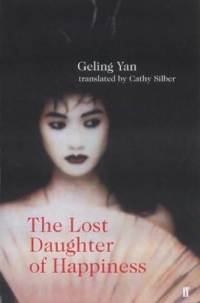
The Lost Daughter of Happiness by Geling Yan

First published in 2001

The Lost Daughter of Happiness is a remarkable novel, a love story unlike any I've read. It unfolds in alternating points of view. Writing in the second person, as if she were speaking to Fusang, looking back at Fusang's life from the present day, the narrator's language is factual, unemotional, sometimes bordering on contemptuous: You are a prostitute, she says, brought to California from China, one who didn't die during the long voyage, who didn't succumb to disease or beatings after being sold into slavery. "I certainly won't let people confuse you with any of the other three thousand whores from China." Occasionally the narrator quotes histories of the California Gold Rush from which she draws her account of Fusang. Occasionally she tells Fusang tidbits about her own life as a recent Chinese immigrant, about her own perplexity understanding the ways of white people, including her husband.

The other point of view is third person, telling the story of Fusang in its own time, sometimes shifting to the lives of others, particularly Chris, the white teenager who quietly worships Fusang's beauty, whose life changes because of her. The other central character is Fusang's Chinese warlord-like kidnapper. Both men love Fusang, and to some extent hate her, in their own warped ways. Fusang, in turn, has special feelings for both men--as distinguished from the hordes of undifferentiated men who want to sleep with her, whose names she's incapable of remembering.

Whether she's describing a battle between Chinese clans (of which Fusang is the indirect cause) or the culture shock and isolation experienced by Chinese immigrants past and present, Geling writes with a fluid grace. Geling avoids sympathetic language, yet her stark portrayal of Fusang's plight is incredibly moving. Still, Geling paints Fusang as largely unaffected by pain or trauma. Fusang may just be simple-minded, but she evinces a knowingness that the other slave girls lack. She understands how to steal pleasure from pain, how to find freedom in enslavement. Unlike the other prostitutes, she's content with a diet of fish heads. There is something zen-like about her simplicity.

Geling writes powerfully about race riots in San Francisco more than a century ago and about present day skinheads who profess their racial hatred on talk shows. She writes about rape and redemption. This short but wide-ranging novel is filled with tension and ugliness while maintaining a soft, quiet tone, but it is also filled with hope and beauty. It is a stunning performance. The Lost Daughter of Happiness deserves a much larger audience.

HIGHLY RECOMMENDED

Monday
Nov292010

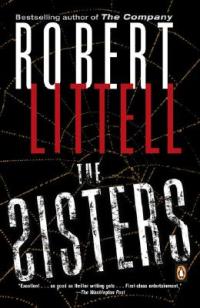
The Sisters by Robert Littell

First published in 1986

The Sisters is one of the best of Robert Littell's novels, and the best of the four fictional accounts of a certain real world event I've read. The plot is byzantine without being confusing; the complexity is lovely and the pace at which events unfold is perfect. Unlike some of Littell's earlier works, the characters on display in The Sisters are fully realized.  A synopsis would spoil the fun, so my description of the novel's contents will be brief.

The sisters Dark and Night (a line from a Whitman poem) are two odd duck CIA agents whose job is to plot.  They are wonderfully quirky and so Machiavellian by nature the CIA seems a perfect place for them to roost.  They’ve cooked up a conspiracy they believe to be authorized, albeit silently, by the CIA Director, and they keep it to themselves when they set it in motion.  Figuring out who is working for whom (and who is betraying whom) is the novel's challenge, but the novel is worth reading for its characters, not just its intrigue.  The story's portrayal of the political workings of the CIA (which might as well be the CYA) seem perfectly credible; in any event, it's a fun addition. A satisfying display of karma at the novel's end left me grinning.

The Sisters is a masterful work, a treat not just for fans of espionage novels but for any reader who enjoys good writing.

HIGHLY RECOMMENDED

Sunday
Nov072010

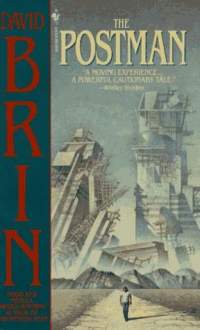
The Postman by David Brin

First published in 1985

In a post-apocalyptic future, Gordon Krantz is something of a nomad, drifting from village to village, acting out one-man plays in exchange for food and shelter.  While evading bandits he stumbles upon an old postal truck.  Krantz takes the dead letter carrier's uniform and, helping himself to the mailbag, begins playing a new role:  that of a postman dispatched by the reconstituted government to reestablish delivery routes.  There is no new government but villagers fighting for survival and fending off tribes of marauders are desperate to believe him.  The question is whether Krantz will live up to the illusion he's invented.

I'm a fan of post-apocalyptic fiction in general, but I approached this novel with the thought that it might not live up to its hype. I was mistaken. Brin created a credible future world, and the concept of a survivor feeling compelled to deliver the mail (even if he stumbled onto the idea for reasons that were far from altruistic) is brilliant: mail delivery becomes not only a means of stitching together a torn nation, but a powerful symbol of national unity and pride. Gordon Krantz, the main character, is more than a bit torn himself, a man of less than heroic stature who, by the novel's end, has grown into not just a hero, but an icon of heroism. Krantz is a fully developed character (a rarity in sf), and his personal transformation is inspiring. The supporting characters are also solid and purposeful. The Postman is a strongly plotted, well written novel, in many ways better than another, more celebrated version of a post-apocalyptic future:  The Road.

HIGHLY RECOMMENDED