The Tzer Island book blog features book reviews written by TChris, the blog's founder.  I hope the blog will help readers discover good books and avoid bad books.  I am a reader, not a book publicist.  This blog does not exist to promote particular books, authors, or publishers.  I therefore do not participate in "virtual book tours" or conduct author interviews.  You will find no contests or giveaways here.

The blog's nonexclusive focus is on literary/mainstream fiction, thriller/crime/spy novels, and science fiction.  While the reviews cover books old and new, in and out of print, the blog does try to direct attention to books that have been recently published.  Reviews of new (or newly reprinted) books generally appear every Monday, Wednesday, and Friday.  Reviews of older books appear on occasional weekends.  Readers are invited and encouraged to comment.  See About Tzer Island for more information about this blog, its categorization of reviews, and its rating system.

Entries in HR (70)

Tuesday
Apr122011

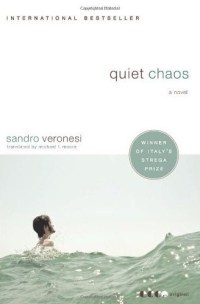
Quiet Chaos by Sandro Veronesi

Published in translation by Ecco on April 12, 2011; first published in 2005.

After Lara, the mother of his child, unexpectedly dies while Pietro is at the beach saving the life of a drowning stranger, Pietro spends his days in his car outside his daughter’s school, contemplating the quiet chaos of children spilling out of the building, experiencing an almost euphoric relaxation that has taken the place of grief.  A good bit of the novel takes place in Pietro’s mind as, in his thoughts, he justifies the affairs he had before Lara died, considers his absent feelings of loss, judges the friends and co-workers who visit him in his parked car and is judged by Lara's sister, with whom he had a fling before he met Lara.  Pietro is an executive in the Milan office of a cable television company that is undergoing an international merger, creating another element of chaos as his boss is sacked, but Pietro -- despite daily visits from company officers and employees -- is indifferent to the workplace turmoil, finding peace and tranquility in the park adjacent to the school, where he engages in amiably superficial conversation with the woman who takes her golden retriever for a daily stroll and plays a recurring game with a Down’s Syndrome child whose mother is taking him to physical therapy sessions. 

There’s something seductive about Sandro Veronesi’s prose, something that drew me in and held my attention even when nothing much was happening.  Other than the early scene in which Pietro and his brother save two women from drowning, there is little action in Quiet Chaos.  There is, instead, a good bit of observation and contemplation.  Pietro listens to Radiohead and decides that the few lyrics he can understand are meant for him, messages from Lara.  He begins to see himself as a symbol of pain, to see his car as a wailing wall without the wall, a fixture planted in front of the school so that others, imagining his sorrow, can feel they are sharing their own suffering with him.  The world happens all around him -- his daughter takes dance lessons, a stranger makes lunch for him, a new car parked by the school is damaged in two different accidents, a co-worker disappears after mistaking the CD drive in his laptop for a cup-holder -- and Pietro stands apart from it all.  One of the few times Pietro is “in the moment” comes during a passionate encounter with a woman (an extended, wonderfully written scene that is nonetheless quite graphic; readers who are turned off by scenes of that nature should stand warned) and even then Pietro suddenly becomes aware that he’s “in the moment,” thereby transforming himself from actor to observer.

For a meandering novel that is in many ways quietly chaotic, the ending offers a surprising amount of resolution and closure. While on its surface Quiet Chaos is about a man coming to terms with his life after his significant other’s death, there’s a lot going on here, more than I am able to articulate in a brief review.  I expect that additional meaning will creep into my consciousness as I continue to think about this fine novel.  Readers who are looking for an action-filled plot will likely be disappointed by Quiet Chaos, but I appreciated Sandro Veronesi’s strong, vividly detailed writing, his intense characters, and his illuminating ideas.  When I finished the novel I pondered whether to give it my highest recommendation but it keeps nagging at me, I keep thinking about it, and on the strength of its impact on my thoughts alone I’ve decided it deserves to be highly recommended. 

HIGHLY RECOMMENDED

Monday
Apr042011

Doc by Mary Doria Russell

Published by Random House on May 3, 2011

Doc Holliday and Wyatt Earp are firmly established in the pantheon of Wild West legends, along with Jesse James and Billy the Kid. So many books have been written about them, fiction and nonfiction, that it may seem surprising to find another novel based on one of these gunslingers. It must be their legendary status that draws the attention of writers. Widespread familiarity with the legend becomes the writer's base, and the chance to reinvent or reinterpret an icon has an undeniable appeal. In Doc, Russell embraces the challenge of making the familiar seem new with surprising success.

Behind every legend there's a person, and it is the person, not the gunfighter, that Mary Doria Russell imagines in her story of Doc Holliday's time in Dodge City. Russell underplays the novel's armed confrontations, taking note of how legends build, how tall tales grow: an incident involving six cowboys evolves in the telling until Holliday faces down two dozen. Ultimately Russell deconstructs the legend, deemphasizing Holliday's skills as a gunfighter/gambler while painting a detailed picture of a loquacious, consumptive dentist who seems always a step away from death. The plot, such as it is, involves the apparent murder of an entirely fictitious character, a friend of Holliday and Wyatt Earp, but the mystery of his death is merely a vehicle to drive a deeper story. It isn't the familiar story of the O.K. Corral and Wyatt Earp's confrontation with the Clantons; the novel makes reference to those events in a concluding chapter, but the story effectively ends in Dodge City, before the Earp brothers and Holliday make their way to Tombstone.

Russell begins with an eyeblink view of John Holliday's Civil War childhood and his brief but violent stay in Texas (where he killed a man and was shot by another). By the time Holliday decides to rebuild his tubercular life in Dodge City, he's taken up with Kate, a princess turned prostitute who entrances him with erudition that matches his own. Kate is a significant figure in Holliday's life and in the novel. Kate's affinity for Holliday is based in part on his ability to win large sums of money at the card tables, in part on his intelligence and education, and in part on her inability to understand him. Unlike the other men in her considerable experience, who "were as obvious and as easily dealt with as a phallus," the complex dentist becomes her most memorable lover. To Kate's dismay, it is Doc Holliday's dentistry, not his gambling, that fills him with pride and purpose. Russell portrays Holliday as a compassionate if ill-tempered man who treats the fictitious characters "China Joe" and John Horse Sanders with respect regardless of their race, who understands the difficult lives that drove women to work in bordellos. Russell's Holliday is a man isolated by his intelligence and southern manners as much as his illness and quick temper.

Russell's Dodge City is a lawless land of unchecked freedom, fueled by the seasonal influx of money brought by Texans driving cattle: "They were giddy with liberty, these boys, free to do anything they could think of and pay for: unwatched by stern elders, unseen by sweethearts back home, unjudged by God, who had surely forsaken this small, bright hellhole in the immense, inhuman darkness that was west Kansas." Russell populates Dodge City with fully realized characters, emphasizing the routine and drama of their daily lives rather than the excitement and rough justice of frontier life. Speaking to Morgan Earp about literature, Holliday argues that Raskolnikoff and Oliver Twist's Fagin are interesting characters because they are a mixture of good and bad. Russell's characters are interesting for the same reasons. She creates a Wyatt Earp who is filled with insecurities instilled by an abusive father. The experiences and motives that drive her politicians and villains illuminate their lives.

I can't speak to the novel's historical accuracy, although I can note that Russell, in an afterward, calls attention to a few minor changes she made in the historical record. She also lists the novel's characters, italicizing the few who are entirely fictitious. Frankly, I don't think it matters; writers of fiction are licensed to change the past for the sake of the story. Still, so far as I can tell, Rusell's novel is as true to the past as it is to the artist's purpose: to tell truths even when they are fictional. Doc is a wise and stirring and truthful novel about a hard, determined, complicated man.

HIGHLY RECOMMENDED

Tuesday
Mar292011

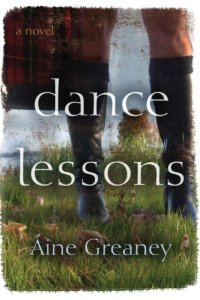
Dance Lessons by Áine Greaney

Published by Syracuse University Press on April 11, 2011 

Dance Lessons is a story of hidden truths and unspoken memories.  The interwoven stories that comprise Dance Lessons begin with Ellen Boisvert, a child of French Canadian parents, and Fintan Dowd, an Irish immigrant working illegally as a Boston bartender.  They meet and marry and are near divorce when Fintan dies in a sailing accident.  At the novel’s center, however, is Fintan’s mother Jo; from her story all the others radiate.  Jo takes stoicism to a new level; she prides herself on bearing pain and misfortune. It is “bitter sacrifice that forms the core, the credo of Jo Dowd’s very existence.”  Jo sacrifices her future to wed a man chosen by her parents, a man who can live on the family farm and do the chores her aging father can no longer handle.  She sacrifices companionship when her loquacious sister moves to the city, leaving her husband and parents to settle into a “deep silence, a silence that seems to have a life of its own.”  Unable to tell Fintan that she is proud of his scholastic achievements, filled with resentment of the woman he loves, she sabotages his happiness and sacrifices the bond between parent and child.  Sacrifice has warped Jo Dowd, and that is the condition she is in when Ellen finds her -- a condition magnified by the cancer growing in her lungs.

At one point in the story, a character wonders what “terrible, awful thing” he would have to do to make his child “deny his very existence.”  That is ultimately the question Ellen seeks to answer.  After Fintan’s death, she learns that his mother is not dead, as he had always claimed, and she travels to Ireland to find Jo.  She says she wants to put her husband’s ghost to rest, but it’s never clear why she believes meeting Fintan’s mother will help her achieve that goal.  For reasons that are again unclear (particularly given her decision to end her marriage), Ellen wants to know why Fintan kept his mother’s existence a secret.  The trip to Ireland seems like a contrivance designed to introduce the reader to Jo, but that is a minor complaint given the compelling story that follows.

The narrative ultimately comes full circle, beginning and ending with Ellen.  Along the way, it jumps between the past and present:  between Jo’s deteriorating relationship with Fintan and Ellen’s discovery of the events that caused their estrangement.  We see parallels as the twin stories develop:  similarities in the behavior of Jo toward Fintan and of Fintan toward Ellen; the absence of family connection, evidenced in Jo’s household by silence and in Ellen’s by meaningless conversation at holiday dinners, family members “making noise -- words to while away the hours until everyone retreated back to his or her own world.”  As it tells these twin stories, the novel branches into other lives that have been touched by the tragedy of Fintan’s upbringing.  At some point the novel starts to read like a literary mystery, with Ellen trying to piece together Fintan’s relationships and tease out the cause of his estrangement from Jo.

Apart from Ellen, there aren’t many significant characters in Dance Lessons a reader might like.  The novel’s strength lies in its ability to make the reader understand and even empathize with unlikable people.  Ellen comes to know her husband and in so doing, comes to terms with his death, with their failed marriage, and with her grief.  In some respects, the ending, starting with a chapter that is almost an epilogue and continuing to the actual epilogue, seems false, out of synch with the rest of the novel, as if Áine Greaney felt a need to bring the storylines to a “feel good” conclusion that would please readers after exposing them to such sad and difficult lives.  At the same time, the pre-epilogue ending offers additional insight into Jo, jolting the reader with another small shock.

There are moments when the beauty of Áine Greaney’s prose dominates all else:  gently rhythmic sentences, descriptions of sights and sounds and smells that stimulate the reader’s senses.  At other times the hushed drama of futile hopes and despairing lives prevails.  Greaney makes subtle changes in the narrative voice as the novel shifts from rural to urban, from the United States to Ireland to England, from older characters to younger ones.  Both in prose style and in content, Greaney crafted a mesmerizing novel.

HIGHLY RECOMMENDED

Saturday
Mar262011

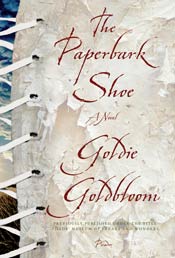
The Paperbark Shoe by Goldie Goldbloom

Published by Picador on March 29, 2011

I knew Gin Toad was a character I would like when, newly arrived in Wyalkatchem, she meets a woman who pats her shoulder, telling her that it's good luck to touch an albino, and Gin responds by tapping the woman and saying "Maybe it's good luck to touch an idiot." Gin doesn't often give voice to her sharp humor but she's nobody's fool, despite being committed to an institution before Toad married her. Toad can barely look at Gin and rarely touches her. Although they feel no passion for each other, she bears his children (losing one to diphtheria) while wondering whether Toad views her as just one more sheep to be bred.

Gin and Toad live on a remote farm in Western Australia. Their hard lives are made more difficult by the shortages created by World War II. Toad is ugly, coarse, uncommunicative, lacking education and refinement, yet he is fundamentally decent, possessed of a hidden depth and secrets that, like Gin's, are deeply buried. Both characters are isolated not just in their location but in their personalities. Both yearn for something they cannot have and dare not dream about.

Gin's stultifying life is transformed by two Italian prisoners of war, placed in Toad's custody as farmhands. The boisterous nature of the Italians is in sharp contrast to the withdrawn silence and studied indifference that defined Toad before their arrival, and it is inevitable that one of them awakens urges in Gin that have long been buried. At one point in the novel the Italian Antonio has to remind Gin that he is a prisoner, but he seems less a prisoner than Gin, who is imprisoned by her appearance and her past, caged by the expectations and perceptions of others. Gin's albino eyes are nearly blind in bright sunlight, but her emotional blindness is a greater disability.

The Paperbark Shoe is a remarkable novel, a multifaceted story of love and desire, war and prejudice. Townspeople are cruel to Toad because of his appearance and unschooled behavior, to Gin because of her albinism, to the Italians because of their heritage. Moments of unexpected humor keep the story's heartbreaking sorrow from becoming overwhelming. Goldbloom's sentences flow in an exquisite rhythm. Her word choice is impeccable. Each character speaks with a distinctive voice. It was clear as the novel progressed that the Italians would change the lives of Gin and Toad, but even knowing that, their lives changed in ways I didn't see coming. Although I didn't want the novel to end, the powerful ending is satisfying, rich with feeling, offering the hope of redemption as a respite from despair. Because of the story it tells, the characters it brings to life, and the beauty of its prose, this is a book I highly recommend. It apparently did well in Australia; it deserves a worldwide audience. 

HIGHLY RECOMMENDED

Monday
Mar212011

The Tiger's Wife by Téa Obreht

Published by Random House on March 8, 2011

By the time she is thirteen, Natalia has taken so many trips with her grandfather to visit the caged tigers that she feels like a prisoner of ritual. Then a war hundreds of miles distant breaks the ritual: the zoo closes, curfews are implemented, students are disappearing, and spending time with her grandfather seems less important than committing small acts of defiance: staying out late, kissing a boyfriend behind a broken vending machine, and listening to black market recordings of Paul Simon and Johnny Cash. When her grandfather is suspended from his medical practice because he is suspected of harboring "loyalist feelings toward the unified state," Natalia adopts new rituals that keep her at his side when he isn't paying clandestine visits to his old patients. In return, he takes her to see an astonishing sight that offers the hope for an eventual restoration of the rituals that made up their pre-war lives. Natalia's grandfather tells her that this is their moment: not a moment of war to be shared by everyone else, but a moment that is uniquely theirs.

The Tiger's Wife is filled with wondrous moments, small scenes that assemble into a novel of power and wisdom and beauty. As an adult doctor delivering medicine across new and uncertain borders, Natalia grieves for her deceased grandfather while recalling the lessons he taught and the stories he told -- stories that more often than not center on death: how it is faced, feared, and embraced. Death is everywhere in this novel: death caused by war, by disease, by animal and man and child. And there is death's counterpoint, a character who cannot die (or so the grandfather's story goes). Death is virtually a character in the novel, as is the devil -- although the devil's identity is somewhat obscure, appearing as someone's uncle in one of the grandfather's stories, suspected of wearing the guise of a tiger by others. The tiger, of course, is a force of death -- feared by many, but not by the tiger's wife, who shows us that fear is unnecessary. Ultimately, coming to terms with death is, I think, the novel's subject matter.

Téa Obreht writes with clarity and compassion. She tells the interwoven stories that comprise The Tiger's Wife without judgment or sentiment. Her characters are authentic; with only one or two exceptions, she doesn't go out of her way to make them likable or sympathetic. Nor does she ask readers to hate characters who commit evil acts, although she wants us to understand them. She does not insist that we either condemn or condone the actions of a wife-abusing butcher. Instead, she gives us a chance to comprehend human complexity, to know that there is more to the characters than their offensive or violent actions. The village gossips, knowing nothing of the truth, judge both the abuser and the abused. Obreht shows us how foolish it is to judge others without knowing them ... and how unlikely it is that we will know enough to judge.

Obrecht writes with the maturity and confidence of an accomplished novelist. Her style is graceful. It is difficult to believe that this is her first novel. If she continues to produce work as sound as The Tiger's Wife, readers should wish her a long career. 

HIGHLY RECOMMENDED