The Tzer Island book blog features book reviews written by TChris, the blog's founder.  I hope the blog will help readers discover good books and avoid bad books.  I am a reader, not a book publicist.  This blog does not exist to promote particular books, authors, or publishers.  I therefore do not participate in "virtual book tours" or conduct author interviews.  You will find no contests or giveaways here.

The blog's nonexclusive focus is on literary/mainstream fiction, thriller/crime/spy novels, and science fiction.  While the reviews cover books old and new, in and out of print, the blog does try to direct attention to books that have been recently published.  Reviews of new (or newly reprinted) books generally appear every Monday, Wednesday, and Friday.  Reviews of older books appear on occasional weekends.  Readers are invited and encouraged to comment.  See About Tzer Island for more information about this blog, its categorization of reviews, and its rating system.

Entries in HR (69)

Thursday
Feb242011

Blood on the Forge by William Attaway

First published in 1941

Blood on the Forge tells the story of three brothers: Melody, who finds the music in every place and situation; Chinatown, who finds the humor; and Big Mat, a relentless worker who studies the Bible and tries to find an elusive inner peace. They work as sharecroppers in Kentucky, accustomed to poverty and racism, until circumstances brought on by Big Mat's quick temper compel their move to Pennsylvania, where they take jobs in a steel mill. Poverty is replaced by dangerous grueling labor that leaves them too exhausted to spend their wages on anything except alcohol, gambling, and whores. Racism is replaced by class division as black steelworkers join new immigrants from Ireland and Italy and Middle Europe, all viewed with disdain by those who inhabit the big houses overlooking the mill. By the novel's end, that conflict is defined by the workers' attempt to organize a union and by the owners' resort to violence to suppress that effort -- leaving the brothers caught in the middle of the conflict, and to some extent divided by it.

Although racism and class struggle are important themes in the novel, the story is about much more than that. If is fundamentally the story of three very different brothers, bonded by family ties and shared lives, but torn apart by their unique experiences. Chinatown must cope with injuries inflicted by hot steel, leaving him feeling less than whole. Big Mat must cope with his own feelings of inadequacy, his inability to give the Mexican woman who moves in with him the moneyed lifestyle that she craves, a feeling he can only overcome with the sense of power he derives from violent behavior. As he struggles to find his music, Melody must cope with the desire he feels for the woman who is living with Big Mat, and with the secret he learns about her.

Attaway tells the story from the perspectives of the brothers, using language that is eloquent in its simplicity. The story is powerful, sad and moving, unforgettable. At the end of the fast moving novel I literally said "Wow."

HIGHLY RECOMMENDED

Monday
Feb212011

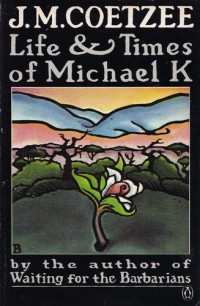
Life and Times of Michael K by J.M. Coetzee

First published in 1983

Oppression is a recurring theme in Coetzee novels, and it is the theme that drives Life and Times of Michael K. While the novel is set in South Africa, it is not explicitly (perhaps not even impliedly) a novel about racial oppression. Rather, Michael is treated as an outsider, as subservient, because he is disfigured and mentally dull. Having been raised in an institution where he was taught to peel potatoes before being given a job as a municipal gardener, Michael wants nothing more than to be left alone, nose to the ground, to work the fertile land of his ancestry. He is a simple man with simple needs and the simplest of those--freedom--is bedeviled by travel permits and curfews and work camps, by a civil war he does not understand, by societal demands that do not concern him. Throughout the novel, Coetzee illustrates the oppression of war, of institutions and bureaucracies, of demanding parents, of uncaring employers and landowners. Even the doctor who envisions himself as Michael's savior wants to bend Michael to his own will.

Using prose that is plain yet elegant, Coetzee creates empathy for Michael's plight--we feel for him when his crops are trampled, when he is removed from the land he loves, when he is forced to do physical labor for the benefit of those who have political pull with the authorities, when he is badgered to talk about his past, when he is not permitted to indulge the simple pleasures of sleeping and eating as he chooses. Michael thinks of himself as an earthworm, but he lacks an earthworm's freedom to be true to itself. The last few pages of the novel are almost an ode to simplicity, to the freedom of living off the land, unencumbered by the dictates of those who would imprison nonconformists.

Life and Times of Michael K is an important contribution to world literature. It is also a moving, beautifully written novel.

HIGHLY RECOMMENDED

Thursday
Feb172011

The Breaking Wave by Nevil Shute

First published in the United Kingdom in 1955 under the title Requiem For A Wren. 

The characters in Nevil Shute's novels always seem to share two qualities: decency and dignity. The novels are filled with pain and death; war is a frequent theme. Toward the end of The Breaking Wave, Shute writes: "Like some infernal monster, still venomous in death, a war can go on killing people for a long time after it's all over." Despite the tragic events they experience, Shute's characters are kind and helpful and caring. The moral of Shute's novels seems to be: death is inevitable; what matters is that you behave decently during your life, so that you can die with your dignity intact. That's certainly the lesson I took from The Breaking Wave.

It's difficult to write a synopsis of The Breaking Wave without including spoilers, so this will be brief. Alan and Bill Duncan are brothers. They grew up on a sheep farm in Australia. The farm is a big business and the family is rather wealthy. Alan and Bill are both in England during World War II. Alan is a fighter pilot in the RAF; his plane is shot down and his feet have to be amputated. Bill is the equivalent of a Navy Seal; he dies on a mission in preparation for D-Day. (Those aren't spoilers; the reader learns these facts early on.) As the novel begins, Alan is returning to the family farm, having finished his post-war law degree at Oxford. He discovers that his mother is distressed by the apparent suicide of the parlor maid. Alan digs around and discovers the maid's diaries. He spends all night reading them and soon realizes that he had met the woman during the war. What Alan learns about her and about his family changes his life.

The woman's story is incredibly sad. I'm glad I was alone when I read The Breaking Wave because my misty-eyed reaction to the last chapters would have destroyed my carefully cultivated image as a manly man. Yet it's also the story of an eventful life, albeit one that is derailed by tragedy. The woman meets her death with her dignity intact, and Shute's moving story makes clear why she made the choice to end her life. As always, Shute writes with a soft voice; there's nothing flashy about the quiet elegance of his prose; he lets the story unfold without getting in its way. And it's an amazing, powerful story, filled with insight about war and relationships and the human condition. The characters are as real and believable as your neighbors, and probably more likable.

Shute is best known for two wonderful novels -- A Town Like Alice and On the Beach -- but his lesser-known novels are every bit as good. The Breaking Wave is one of his best.

HIGHLY RECOMMENDED

Tuesday
Feb152011

Night Dogs by Kent Anderson

First published in 1996

Kent Anderson was a Special Forces sergeant during the Vietnam War, an experience that informed his first novel, Sympathy for the Devil.  When he returned to civilian life, he took a job as a police officer.  That experience is reflected his second book, Night Dogs.  The novel tracks a short period in the life of a Vietnam veteran who works as a police officer in the North Precinct of Portland, Oregon.

I am not usually a fan of books about police officers, as they tend to be simplistic: they either glorify the job and make the officers appear more heroic than they generally are in real life, or they demonize all cops, painting them as corrupt or (at best) incompetent. I was therefore surprised by how much I enjoyed Anderson's novel. It isn't a thriller, isn't a conventional police novel with a well-structured plot that results in the cop catching the bad guy. Instead, the novel tells the story of a life--the life of a badly damaged man (damaged in large part by his service in the Special Forces) who happens to be a cop, a profession that gives him the opportunity to vent his anger and to unleash his violent impulses. Far from portraying the cop as a superhero, Anderson created a character who is capable of being a jerk, a racist, an ego-driven maniac, as well as a compassionate, funny, sensible human being. It is that complexity, that refusal to stereotype, that makes the character so interesting.

The story meanders from incident to incident, but Night Dogs is less about what the cop does than how he manages to live with himself--and how, in the end, he will deal with his pain-filled life. The writing is sharp, vivid, intense, and incredibly powerful. The story is sometimes tragic, often darkly funny, and always brutally honest. This is one heck of a good novel.

HIGHLY RECOMMENDED

Friday
Feb112011

The Sportswriter by Richard Ford

First published in 1986

At some point in The Sportswriter, the title character talks about feeling "a hundred things at once, all competing to take the moment and make it their own, reduce undramatic life to a gritty, knowable kernel." That, I think, is what Richard Ford's novel tries to do. The Sportswriter is a snapshot of a man's undramatic life in middle age, an attempt to make it knowable.

There are those who become bored by novels that lack a conventional plot -- a murder mystery to solve, an alien invasion to defeat -- but it isn't fair to complain (as have many Amazon reviewers) that "nothing happens" during the course of The Sportswriter. Plenty of things happen during the short time span the novel covers: Frank Bascombe visits his son's grave, takes a trip to Detroit with his girlfriend, interviews a mentally shaky former athlete, has Easter dinner with his girlfriend's family, gets punched in the mouth, has significant conversations with his ex-wife and an old girlfriend, endures a male friend's unwelcome advance, chats with a teenage girl after a car knocks a shopping cart into the phone booth he occupies, flirts with an office intern ... nothing terribly exciting, no bombs to disarm or terrorists to defeat, just the random events of a life. But as Frank muses about those events, and as he recalls other events that shaped his life in ways large and small, we come to know him, to understand him ... and, with luck, we may understand ourselves or our friends and family a bit better for the effort of examining Frank's life.

It's unusual and oddly comforting to read a novel about a man who is coming to terms with the tragedy in his life (his son's death and his subsequent divorce), who is neither cynical nor self-loathing, who is trying to live decently and who admits his mistakes. What The Sportswriter lacks in dramatic tension it makes up for with insightful examination: of attitudes, emotions, lifestyles, relationships. It is filled with lessons: happiness comes from living in the moment without the distracted wondering about other, better moments that might exist; an attempt to know everything about another person during a one night stand becomes a miserable substitute for self-knowledge; the future is a mystery to be embraced; the "world is a more engaging and less dramatic place than writers ever give it credit for being." Yet for all the lessons Frank has learned, he's living a deliberately isolated life; he professes to like people but most often stands apart from them, perhaps afraid of new attachments in the wake of losing his son and wife. Frank claims that to be a sportswriter "is to live your life mostly with your thoughts, and only the edge of others'." Frank refuses to admit that his superficial relationships are not caused by his chosen profession. As a defense mechanism against pain, he lives his life largely within his own mind (a state he describes as "dreaminess"), yet he desperately wants to feel close to (and even marry) a girlfriend who he knows isn't right for him. Frank clearly has more to learn, and that too, I think, is one of the book's lessons.  Frank continues to try; he's holding his life together and slowly reopening himself to the world around him.

Finally, the novel is beautifully written. Ford has a pitch-perfect ear for dialog and regional speech patterns. I think The Sportswriter is a remarkable achievement. Although it isn't the right novel for readers who crave fast action or a plot-driven story, I admired it immensely.

HIGHLY RECOMMENDED