The Tzer Island book blog features book reviews written by TChris, the blog's founder.  I hope the blog will help readers discover good books and avoid bad books.  I am a reader, not a book publicist.  This blog does not exist to promote particular books, authors, or publishers.  I therefore do not participate in "virtual book tours" or conduct author interviews.  You will find no contests or giveaways here.

The blog's nonexclusive focus is on literary/mainstream fiction, thriller/crime/spy novels, and science fiction.  While the reviews cover books old and new, in and out of print, the blog does try to direct attention to books that have been recently published.  Reviews of new (or newly reprinted) books generally appear every Monday, Wednesday, and Friday.  Reviews of older books appear on occasional weekends.  Readers are invited and encouraged to comment.  See About Tzer Island for more information about this blog, its categorization of reviews, and its rating system.

Entries in HR (69)

Friday
Aug102018

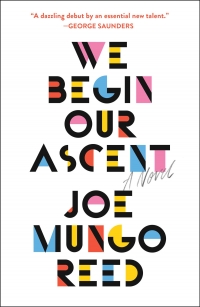
We Begin Our Ascent by Joe Mungo Reed

Published by Simon & Schuster on June 19, 2018

In part, We Begin Our Ascent is about wanting things we can’t have precisely because we can’t have them. There’s nothing wrong with wanting to be the best, but the desire for the unattainable pushes good people to make bad choices.

We Begin Our Ascent is also about recognizing and celebrating the things that are more important than accomplishment. Being alive and in good health. Loving and being loved. Living with honor and acquiring wisdom.

To frame those themes, Joe Mungo Reed wrote We Begin Our Ascent as the Inside Baseball of bicycle racing. Without becoming a racing manual, the story integrates information about how racers prepare, how they work as a team, how they decide which performance enhancing drugs are best. The novel conveys an understanding that the sport of bicycle racing at the professional level is more than a game, that “the dedication, the logic and attention applied make it vivid, real and meaningful.”

Solomon is part of a bicycle racing team that is sponsored by a poultry company. His job is to help Fabrice, the strongest mountain rider, win. Sol’s job is not to win; he knows he cannot win. But the longer he can sustain the pace while riding in front of Fabrice, the more energy Fabrice will conserve, and the better will be Fabrice’s chance of powering up the mountain ahead of everyone else at the end of the toughest stretches in the race. The crowds cheer for each rider without realizing that most of them are not trying to win as individuals, but as a team.

Sol is happiest when he is part of the peloton, the mass of bicycles that race in a clump until the best riders pull out and compete for victory. Sol knows his place in the universe, and his place is in the peloton. At the same time, he learns that helping the team will require him to engage in the rampant doping that gives his competitors an edge.

Sol’s wife studies the genetics of zebra fish. She admires Sol’s dedication, while her mother wonders what kind of career can be made of riding a bicycle. They are balancing recent parenthood with their dedication to busy careers that keep them apart for much of the year.

Part of the novel’s drama comes from pressure to involve Sol’s wife in the transportation of performance enhancing drugs and the oxygen-rich blood that riders use to restore their vigor.

Of course, the race itself delivers the inherent drama of competition. Riding down mountains at speed is both exhilarating and dangerous. Joe Mungo Reed makes sure the reader is always conscious of the risk that a rider takes.

Both racing and doping carry risks, and those risks generate a surprising amount of suspense. The reader’s anticipation of the novel’s climax makes it even more powerful.

We Begin Our Ascent is a quiet and elegant novel. The story is interesting and entertaining until, like a bicycle racer who has found his rhythm, it shifts gears and reaches another level. The novel raises profound questions about balancing competition against our other drives, balancing winning against integrity, balancing success against loss. The novel spotlights the difficulty of making life-changing choices (not just deciding what is morally right, but what is right for our lives) and illustrates both the profound consequences of making the wrong choice and the randomness that might determine whether a choice is right or wrong.

In a climax that is deeply moving, We Begin Our Ascent reminds us that our lives are different from the stories we tell ourselves about our lives. Discovering what is at the root of our lives, the things that are truly important, is an even bigger struggle than peddling up a mountain. Few novels have made that argument as persuasively as We Begin Our Ascent.

HIGHLY RECOMMENDED

Sunday
Feb122017

The Last Mandarin by Stephen Becker

First published in 1979; published digitally by Open Road Media on January 12, 2016

Stephen Becker combined the elegant prose of a literary author with the storytelling of a genre master. Nowhere are those gifts more evident than in the novels that comprise the Far East Trilogy. The Last Mandarin is the second novel in that series. It is a wonderful collision of east and west, showcasing cultural differences and universal verities. An adventure story told with literary flair, The Last Mandarin mixes humor and drama, romance and war, honorable rogues and disreputable heroes.

In 1949, the Nationalists are fighting the Communists and the poor are dying on the streets of Peking. Burnham, retired from the American military, is hired to bring death to a Japanese war criminal named Kanamori Shoichi. But the true nature of his mission is concealed, even from him.

Burnham encountered Kanamori during the Rape of Nanking in 1937. His memories give him a personal stake in his mission. His quest takes him all around Peking, to beggars and bars, to the police and gangsters, to prostitutes and pillars of Chinese society. Given a choice, Burnham prefers prostitutes and ricksha drivers to the more hypocritical members of society. A thread of decency runs through all of Becker’s novels, and Burnham, while far from perfect, is a decent man.

Mixed in with Burnham’s pursuit are flashback chapters that explain Kanamori’s role in the Japanese military, both as a warrior and then as Japan’s emissary to the Chinese drug trade. I can’t say that Kanamori is a sympathetic character (at least initially), but Becker makes it possible to understand how Kanamori perceived his life and the lives of those who surrounded him. Enjoying the benefits of corruption while the war is going tolerably well for the Japanese, Kanamori fancies himself the last mandarin, but we know that the war did not end well for his side. Kanamori is a complex figure, torn between two countries and a betrayer of both, soulless yet plagued by demons.

The dialog in The Last Mandarin is rich with metaphor and misdirection. “Probably there are more ways not to answer a question in Chinese than in any other tongue” and Burnham employs them all. The dialog is also rich with humor (“I am always thirsty after being beaten about the head”). Becker pays tribute to the elegance of Chinese language and to China’s remarkable history, culture, and artistic achievements, but never turns a blind eye to the corruption and political unrest that has for so long troubled the nation. The novel’s atmosphere is utterly convincing.

Some images in The Last Mandarin, particularly Becker’s description of the atrocities committed by the Japanese in Nanking, are disturbing, although the images are less disturbing than the reality they describe. Some erotic images, particularly Becker’s description of a night that Burnham spends with a prostitute, will only be offensive to those who are offended by joy and love.

All good novels pose a moral dilemma. Burnham’s is what to do with Kanamori if he finds him. The choice is not as easy or obvious as it first appears. Letting go of a painful past is never easy but sometimes necessary, and justice can take many forms. The great lesson of The Last Mandarin is this: You never know what benefit might come from making a new friend of an old enemy.

Like many fine novels, The Last Mandarin includes a love story. It is romantic because it eschews all pretense of romance. In Burnham’s world, love is what we salvage from horror. In the end, the best we can hope for is to “find our lovers, bake our bread and watch the sunset in peace.” And the best thing we can do for the world is to help make love possible.

The Last Mandarin is a masterful mix of adventure, humor, drama, tragedy, philosophy, history, romance, and atmosphere. Stephen Becker is one of America’s great uncelebrated novelists and The Last Mandarin is a prime example of how much fun readers can have if they take the time to find his work.

HIGHLY RECOMMENDED

Monday
Aug222016

The Jealous Kind by James Lee Burke

Published by Simon & Schuster on August 30, 2016

The Jealous Kind is a crime story, but it’s also the story of a teenage boy who is learning to understand himself, who is creating an identity he can carry into adulthood. The novel is also about friendship -- the difficulty of separating true friends from false friends, of deciding whether a friendship is real and when it should end. And it’s about the difficulty of being a decent person in an indecent world.

Aaron Broussard is a high school student in Texas from a working class background. His interest in a girl sparks conflict with a bully. Before long, Aaron and his friend Saber Bledsoe are suspected of torching a car near the area where a Mexican girl’s body is found. On top of that, one of his teachers, a man who is suspected of sexually abusing children, is deeply antagonistic to Broussard and Bledsoe. And on top of that, various characters have mob connections, making them doubly dangerous. And to top it all off, Aaron interacts with police officers who belong “to the huge army of people who believed that authority over others was an achievement and that violence was proof of a man’s bravery" -- although one police detective is a better example of humanity than the others.

As the plot unfolds, various acts of mayhem and murder occur. Aaron and/or Saber are suspected of involvement in most of them. The challenge for the reader is to figure out who did what. With an assortment of mobsters, gang members, and potentially violent people to choose from -- people whose motivations might be protective or destructive -- the challenge is enough to hold the reader’s steadfast interest.

Aaron’s father might be the novel’s most interesting character. He has an old-fashioned kind of southern honor. He’s well educated and knows that those of lesser “breeding” might mistake his sense of civility and manners for weakness. He believes in turning the other cheek, a value he labors to instill in Aaron.

Aaron’s father served in World War I, an experience he doesn’t like to discuss. World War II is looming, but the theme of war in The Jealous Kind is broader than international conflict. Class warfare and a hint of race wars are background themes through which the story must be viewed.

James Lee Burke builds tension chapter by chapter. It seems inevitable that Aaron will confront a life-changing moment. Whether he will survive, not just physically but emotionally, becomes the novel’s gripping question. The story is about courage, with which Aaron is plentifully supplied, but it is also about having the wisdom and maturity to make good choices -- to understand that violence is a last resort, even in a violent world. These are lessons taught by his father that Aaron will need to learn if he hopes to survive without ruining his life.

The Jealous Kind is one of Burke’s most powerful novels. In addition to Aaron, key characters engage in small acts of heroism, defying evil, standing up for principles despite overwhelming opposition. The point of The Jealous Kind, I think, is that it’s possible to find the courage and the will to confront evil without becoming evil. And sometimes courage is collective, as when friends have each other’s backs. There are always lessons to be learned from Burke’s novels and from that standpoint (as well as memorable characters, remarkable prose, and a compelling story), The Jealous Kind is one of his best.

HIGHLY RECOMMENDED

Friday
Jun172016

A Doubter's Almanac by Ethan Canin

Published by Random House on February 16, 2016

The first third of A Doubter’s Almanac tells the story of Milo Adret. The rest of the novel is a father-son story. The middle bounces around in time a bit, but it focuses on a key summer in Hans Andret’s early teen years, the last summer he will spend with his father. Hans is an adult with a family of his own in the last third. The heart of the novel involves the drama of being in the family of a broken genius, a man who cannot conform, who cannot stop dreaming, who cannot put his family’s needs ahead of his own. The significant question is whether the son is destined to follow the father’s path.

Milo has an unnaturally strong spatial sense (sort of a built-in GPS) and a natural affinity for math. As a child, Milo carves a chain out of wood just to prove that he can. With mediocre grades in humanities and social sciences, Milo ekes out a college degree and finds a career pumping gas before he is lured into graduate school at UC-Berkeley. With the help of a mentor, but primarily due to a drive he cannot define, he tackles one of the toughest problems in mathematics and wins a Fields Medal.

Everything Milo gains -- prestige, a professorship at Princeton, a family -- he will eventually place at risk, because he is a slave to his addictions and compulsions. There is always another challenge, and eventually one will come along that cannot be solved, or that a competitor will solve first. As Milo sums it up, mathematicians are defined by their understanding of their own ignorance. “Ignorance and wounded shrieking.” Whether Milo will be destroyed by his shrieking obsession to overcome ignorance is a question that the reader asks from the novel’s first page.

Hans and his sister Paulette inherit Milo’s spatial skills and intuitive understanding of mathematics. Hans uses that skill as one of the first mathematicians to revolutionize hedge fund trading. Hans also seems to inherit some of his father’s weaknesses. Like father like son? One of the most absorbing questions that faces the reader is whether and how Milo can break his father’s mold.

Every now and then a revelation comes along that requires the reader to rethink one of the characters. And every now and then characters pause to reevaluate themselves, to question their decisions and the direction of their lives, as most thinking people do. Like Milo, we ask ourselves what really matters. Probably we’ll never know, but those who spend their lives obsessing about a goal (whether it’s wealth or professional achievement or the solution to a mathematical puzzle) are likely to conclude in the end that they failed to pursue the things that matter.

An explosive scene -- a scene in which the family explodes -- about two-thirds of the way into the novel captures every family dynamic that underlies the story: love and hate; self-loathing projected to other family members; communication that vacillates between ineffective and all-too-effective; confrontation and avoidance; acceptance and rejection. It is an intense, gut-wrenching moment in a family’s life. And yet its aftermath is just as telling. The four members of this family may not understand each other at all, but in many ways, they understand each other perfectly.

Late in the novel a doctor says, “We never rightly understand the existence of another, do we?” I think that is the central point of A Doubter’s Almanac. The mind is a mystery and we are nothing but our minds. Whether we can comprehend our own existence is doubtful; truly understanding another person is beyond us. At best, we can accept and appreciate others. But the impossibility of complete knowledge does not stop us from learning more about others, about ourselves, about the world. We “grow wise in increments.”

Ethan Canin’s prose is elegant. He writes lovingly of the indefinable nature of time. He conveys the beauty of math to those of us who fought a losing battle with trigonometry. But it is the beauty of the mind, each so different from every other -- the beauty even (perhaps especially) of minds with eccentric wiring, even of the wasted ones -- that he captures so perfectly. “Beauty prefers truth,” Milo says. Canin quotes Descartes’ adage that a seeker of truth must doubt all things. A Doubter’s Almanac is rich with beauty and truth.

HIGHLY RECOMMENDED

Wednesday
Nov042015

The Hot Countries by Timothy Hallinan

Published by Soho Crime on October 6, 2015

“We all need friends at times. Doesn’t much matter who they are.” That’s just one of the truths spoken in The Hot Countries, the latest and best of the Poke Rafferty novels. Poke’s friends -- people he might have identified as acquaintances rather than friends before this novel -- are the key to this novel’s success.

Timothy Hallinan writes circles around a number of more popular thriller writers who are just phoning it in. I have never been disappointed by a Hallinan novel. Hallinan’s Junior Bender series is fun, but his Poke Rafferty series probes the human character in greater depth.

In The Hot Countries, Hallinan focuses on aging collateral characters who no longer have a purpose in life and seem incapable of searching for one. Hallinan is a master at writing about people living in emotional pain, people in a state of decline, people who have lost themselves. Fortunately, he balances the darkness with humor and with glimpses of human decency.

Arthur Varney shows up in Bangkok looking for Poke Rafferty. Varney wants something from Poke, maybe a couple of things, both relating to people and events found in The Fear Artist and For the Dead. Like all Poke Rafferty novels, however, The Hot Countries can easily be read as a stand-alone.

One of the strongest characters in The Hot Countries (other than Poke) is an old veteran named Wallace who has been destroyed by love more than war. Seeing Varney takes Wallace into his tortured past, giving Hallinan a chance to tell the veteran’s story. A couple of other strong characters are children, particularly Treasure, a girl who has suffered a violent life, some of which was detailed in earlier novels. She’s a kid who is dedicated to survival, but during the course of the novel, circumstances cause Poke to wonder whether he has misjudged her.

Hallinan has a gift for describing Bangkok, from the fat raindrops to the grim tourists and grizzled expats who choke its streets. He also has a strong grasp of Thai people and culture, of bar girls and the foreign customers who never bother to probe beneath the smiling fantasies that occupy a week or two of their lives. Hallinan’s prose is descriptive, fresh, and engaging, but it’s also honest. He describes Poke (a travel writer) as staring at his laptop “as he tried to find his way to a sentence he believed.” I love Hallinan’s novels because, unlike so many current crime writers, Hallinan always writes sentences I can believe.

Astute observations of human nature combine with escalating tension in a novel that is alternately chilling and moving. The ending couldn’t be better. The Hot Countries is exactly what a thriller should be -- a novel about the triumph of the human spirit that features ordinary people in threatening situations who reveal their strengths and flaws as they strive to overcome adversity. It is the best novel I’ve read by Hallinan. He is now permanently enshrined as one of my favorite contemporary crime writers.

HIGHLY RECOMMENDED

Page 1 ... 2 3 4 5 6 ... 14 Next 5 Entries »