The Tzer Island book blog features book reviews written by TChris, the blog's founder.  I hope the blog will help readers discover good books and avoid bad books.  I am a reader, not a book publicist.  This blog does not exist to promote particular books, authors, or publishers.  I therefore do not participate in "virtual book tours" or conduct author interviews.  You will find no contests or giveaways here.

The blog's nonexclusive focus is on literary/mainstream fiction, thriller/crime/spy novels, and science fiction.  While the reviews cover books old and new, in and out of print, the blog does try to direct attention to books that have been recently published.  Reviews of new (or newly reprinted) books generally appear every Monday, Wednesday, and Friday.  Reviews of older books appear on occasional weekends.  Readers are invited and encouraged to comment.  See About Tzer Island for more information about this blog, its categorization of reviews, and its rating system.

Entries in HR (69)

Saturday
Feb202021

Kindred by Octavia Butler

First published in 1979; anthologized by the Library of America in Octavia E. Butler: Kindred, Fledgling, Collected Stories on January 19, 2021

Kindred, Octavia Butler’s first and most widely praised novel, tells the story of a black woman who is repeatedly transported from Los Angeles in 1976 to Maryland in the years before the Civil War. Dana Franklin makes the journey each time the life of her ancestor, Rufus Weylin, is threatened. Her trips have a purpose: to save the life of Rufus, the white son of a slave owner, so that he can make a slave named Alice pregnant and begin the lineage that will eventually lead to Dana’s existence.

Dana makes about a half dozen trips to the past, one time bringing her white husband, Kevin, with her. From her perspective, some of the journeys last for months. She only returns to her own time when she experiences an intense fear of death. In the present, she realizes she has only been missing for a few hours.

In a time when people who live on the fringe continue to celebrate the Confederacy and its generals, when southern schools still teach children that the Civil War was “the war of Northern aggression,” Kindred should be — and is, in any schools — required reading. Butler’s description of slavery is vivid. The lives of slaves are depicted in the same detail as the lives of their masters, the key difference being the status of slaves as property. Butler emphasizes the ease with which their masters accept their entitlement to use their property as they wish. Slaves have no right to refuse orders, whether to labor in the fields or sleep with the master. Disobedience is punished with the whip. More severe punishments are inflicted on slaves who try to run away. The most troublesome slaves — those who won’t be broken — are sold to Southern states where life will be even worse. Education of slaves is prohibited because it might encourage them to think of themselves as equal to whites. Yet many whites are also poorly educated; Rufus can barely read.

Kindred is not just an indictment of slavery. Butler explores the economic and social forces that motivated the South to rebel rather than recognize that black people were entitled to the same rights as white people. Rufus is not an entirely evil man, although he is not a good man. He loves Alice but, after he buys her, he feels he has the right to rape her — an act he regrets only in its aftermath. He is more kind to Dana than he is to his slaves but rescinds the kindness when he feels a need to punish her. He struggles with whether he should free the children he fathers with Alice. Rufus is the son of a man who values slaves only for their ability to work and to breed children that he can sell. Rufus has not fallen far from the tree but progress in American history has been incremental. Rufus is Butler’s example of a white man who has taken the first baby steps toward attitudinal change.

When Kevin is stuck in the past after Dana returns to the present, Dana worries that the intervening years before they reunite may have altered Kevin’s view of race. That fear is a product of Dana’s understanding that society shapes perceptions and that resisting the pressure of racial peers to see the world from their perspective requires strength and courage. That understanding helps Dana fight to retain her identity when slaves mock her for dressing like a man (she wears pants) and talking like a white person. Yet she can’t do much to help the slaves with whom she lives — she understands the boundaries she must not cross — because the scant protection she receives by posing as Kevin’s property won’t save her from brutality if she tries to force twentieth century beliefs upon eighteenth century slaveowners.

The complexity of Dana’s character is also illustrated by the moral choice she must make when Alice — who was once a free woman — is prepared to die rather than continue living as Rufus’ mate. Dana can well understand that feeling, but if Alice dies without giving birth to the child who will be Dana’s ancestor, Dana will never be born. She encourages Alice to stay with Rufus not just to save Alice’s life, but for the more selfish purpose of assuring her own survival.

The Trump administration was justly criticized for advocating a sanitized version of American history that it characterized as “patriotic.” The curriculum advocated by Trump's Department of Education surely has no place for a book that reveals historical truth as effectively as Kindred. Americans can’t expect to move past racial division until every child understands that slavery wasn't just another form of employment. Flying the Confederate flag, memorializing generals who fought to maintain the institution of slavery, and whitewashing American history are not the acts of patriots. An education grounded in American exceptionalism rather than the truth of America's past is founded on dishonesty and exclusion. Every student — and every adult — who gets a sense of the true meaning of slavery by reading Kindred will have a deeper understanding of how racial division continues to be shaped by dehumanizing attitudes that were widespread in the years before the Civil War.

HIGHLY RECOMMENDED

Monday
Jul202020

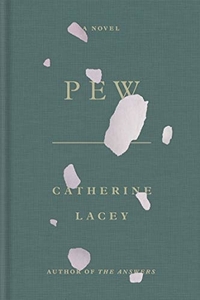
Pew by Catherine Lacey

Published by Farrar, Straus and Giroux on July 21, 2020

The narrator of Pew is a boy or a girl of uncertain race and nationality, somewhere on the border of being a child or an adult, male or female, brown or white. The narrator has learned that church pews provide a place to sleep that is sheltered from the elements and peaceful when no service is being held. A pastor decides to call the narrator Pew after the congregation finds the stranger sleeping on a pew during a service. The couple who usually occupy that pew decide it is their Christian duty to bring the stranger home. They soon become uncomfortable and even a bit fearful because Pew will not answer their questions about just who or what Pew is.

Pew understands English but rarely speaks. Pew privately engages with a refugee child named Nelson who meets Pew at another home where Pew is taken for meetings with a therapist. Nelson tells Pew that his “whole family was killed in the name of God and now these people want me to sing a hymn like it was some kind of misunderstanding. Must have been some other guy.” Nelson notes that Pew’s skin sometimes seems lighter and sometimes darker. One of the community leaders notes that he’s never seen a person who looks quite like Pew, presumably because it is so hard to pin down what Pew looks like. Gazing down at “this body” in private, Pew wonders: “Did everyone feel this vacillating, animal loneliness after removing clothes? How could I still be this thing, answering to its endless needs and betrayals?”

The decision to make Pew an indefinite person, someone who defies labels, is a stroke of genius that allows Catherine Lacey to explore the nature of identity and how important identity is to people who don’t know how to react to someone until that person has been defined. Few of the characters can accept that Pew is just a person. They want Pew to be a male or female person or a gay or straight person or a sexually traumatized person or a black or white or foreign or American person. The need to label Pew before deciding how (or whether) to interact with Pew is a theme that permeates the story. The ability to “identify each other,” in the words of a community leader, is what makes us “civilized.” Another community member worries about allowing Pew to interact with the community’s teens (despite Pew’s lack of inclination to do so) without knowing if Pew is “this way or that.”

The Reverend is quite insistent on knowing whether Pew is biologically a boy or girl (you are what God made you, the Reverend insists, you don’t get to decide) but he doesn’t want to find out the hard way. He insists that all people are entitled to “the same kind of respect,” regardless of gender beliefs or national origin, but Pew wonders how many kinds of respect exist. When Pew remains silent rather than answering questions, most of the community views him with even greater suspicion on the theory that someone who doesn’t speak must have something to hide. Pew, in fact, has nothing to hide but nothing to share. Pew has no memory of parents or home or belonging. Pew’s memories are primal. Pew remembers hunger. Pew remembers the terror of being a child “so small that anyone could just pick you up and take you anywhere at any time,” a terror that makes Pew feel “it’s a wonder there are people at all.”

While the community claims a religious motivation to help Pew (“the whole congregation is concerned, but we know God sent you to us for a reason”), it is clear they want to know how to classify Pew so they can send this stranger to a place where s/he might be “more comfortable” — i.e., somewhere that isn’t here, a place where they won’t be reminded that Pew exists. They claim to want what is best for Pew while reserving the right to decide for themselves what is best for Pew, a decision that will clearly be driven by whatever they feel is best for their own lives.

A religious festival is approaching that fills everyone with dread. The festival was originally seen as a way to reconcile the white community with the segregated black community, although the black community no longer participates. The concept of wearing masks to confess sins at a festival is sufficiently intriguing to warrant a novel of its own, but it is just one of several background elements that create a vague sense of unease that permeates the novel. A nurse at a clinic where Pew refuses to undress is disturbed by some people who recently appeared. Some sort of unrest in a neighboring county is dominating the news. Characters speak of living in a time of evilness before they turn off the news and change the topic, avoiding any substantive discussion of the evil that surrounds and threatens to invade their community. All of this unrest is deliberately undefined, a sort of background noise that heightens the reader’s sense of anxiety as the story moves forward.

The novel contains stories within stories. A (presumably) gay character talks to Pew about how the community isn’t so bad because “no one acts ugly to me. Not to my face.” The character wants Pew to know that being different is tolerated, if not accepted, by the community. Another character talks to Pew about the quiet grief he endures regarding his daughter’s decision to renounce science and equality to marry into the church: “what about when you lose someone who is still alive? When you lose track of the person you know within a person they’ve become — what kind of grief is that?” A woman named Tammy remembers a Latvian woman who was kind to her when she ran away from home at 17, an immigrant who had to make a new life among strangers, a woman with whom Tammy instantly bonded because they both felt misplaced, a sensation that has gripped Tammy since childhood, when she felt that her existence was an accident. Tammy and her husband later tell a tragic story about ill-fated peacocks, ending with the moral: “There’s all sorts of things a person can’t know until it’s too late.”

There is so much stuffed into this relatively short novel that it might take two or three readings to unpack it all. I can imagine professors using it as a teaching tool, not just in literature classes but in philosophy and a variety of social sciences. From a casual reader’s standpoint, the story is beautifully told, raising universal questions that are particularly timely given the worldwide rise of nationalism and white supremacy and intolerance of nontraditional gender identities. Pew is provocative in its multi-faceted portrayal of people who feel like outcasts because they do not easily fit within the narrow boundaries that a community is prepared to accept, no matter how much the community might claim to treat everyone with respect. Some readers might dislike Pew for its ambiguity, but the importance of feeling okay with ambiguity is the novel’s point. I’ve never read a novel that makes the point quite so effectively.

HIGHLY RECOMMENDED

Friday
May012020

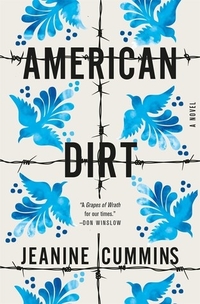
American Dirt by Jeanine Cummins

Published by Flatiron Books on January 21, 2020

So much of American Dirt is either tense or heartbreaking that it is a relief to reach the end. This is such a powerful and moving novel that only the emptiest of hearts could remain untouched by the story.

American Dirt imagines that the most ruthless cartel leader in Acapulco, a man named Javier Fuentes, is a sensitive soul and an avid reader, a man who discusses poetry with his daughter and literature with a bookstore owner named Lydia Pérez. Lydia’s husband, Sebastián Pérez Delgado, is a reporter who does not let threats deter him from writing about the cartels. When he writes about Javier, cartel members murder Sebastián and sixteen members of his extended family. Only Lydia and her son Luca escape. Lydia eventually learns the reason for Javier’s extreme response, but her immediate need is to flee before Javier’s cartel kills her son.

American Dirt follow Lydia on her harrowing journey from Acapulco to the United States. As Lydia is trying to understand how to ride on top of a northbound train (la Bestia), she meets two teenage girls, Rebecca and Soledad, who are fleeing sexual violence in Honduras. The teens encounter more sexual violence on their northbound journey. Those scenes are implied — the text isn’t graphic — but American Dirt is not a book for the squeamish. The sense of realism that Jeanine Cummins conveys is one reason the story is so emotionally distressing.

The narrative is electrifying. Lydia navigates from one danger to another — boarding moving trains with a small child, eluding cartel members and lesser criminals, losing her money to corrupt authorities who kidnap and shake down migrants under the pretense of arresting them, following a coyote on a trek through the Arizona desert that is made more dangerous by flash floods and armed vigilantes who are itching to shoot migrants. The reader rarely has time to take a break from worrying about Lydia and Luca, as well as the other characters who have placed their lives at risk to cross the border illegally because they truly have no better choice.

For all its tragedy, American Dirt reminds the reader that instincts of decency still prompt people to help the less fortunate, sometimes at risk to their own well-being, even as indecent people exploit or attack them. The book is filled with small moments of hope, as people who live in poverty sacrifice to help others who are even less fortunate.

In an Author’s Note at the end of American Dirt, Cummins writes that the world has enough novels about the violent men who call themselves heroes. Cummins says she is more interested in victims, but (although Cummins doesn’t say it) Lydia and Rebecca and Soledad rise above the status of victims. They are heroes because they fight not just for survival, but to preserve their humanity. While some victims shut down or seek revenge when they are wronged, Lydia demonstrates heroic strength; “she feels every molecule of her loss and she endures it. She is not diluted, but amplified.”

Cummins’ supple prose is just as remarkable as the story. American Dirt perfectly illustrates the horrors suffered by refugees and other migrants without preaching or politicizing. It is a book featuring almost no Americans that deserves to become an American classic.

HIGHLY RECOMMENDED

Monday
Mar022020

Apeirogon by Colum McCann

Published by Random House on February 25, 2020

Colum McCann tells us that an apeirogon is a “shape with a countably infinite number of sides.” In a book that examines the conflict between Israelis and Palestinians, the title is apt. There are more than two “sides” to the conflict; everyone has an opinion. The novel is a balanced attempt to do justice to all the opinions by cutting through the politics and focusing on the deaths of two children, one Israeli and one Palestinian. Apeiron explores how the aftermath of those two real-world deaths illuminates the larger issues that Israel and Palestine face.

McCann tells the reader that Apeirogon is “a hybrid novel with invention at its core” that weaves together “speculation, memory, fact, and imagination.” The novel is remarkable because it is based on two remarkable people. Rami Elhanan, an Israeli, lost his daughter to suicide bombers when she was thirteen. Bassam Aramin, a Palestinian, lost his son to a Border Patrol guard when he was ten. Both men traveled on a complex internal journey before arriving at the realization that their grief was not their own, but was the same grief shared by all parents of children who die violent deaths. The realization that your enemy has feelings, the same feelings that engulf you, sparks the understanding that this person isn’t your enemy at all. A parent who lost a child is not an enemy.

The two men arrived at the same conclusion — ending the Occupation is the only way to achieve peace and justice, to prevent the senseless deaths of more children. They started Combatants for Peace to spread that message. Their position is unthinkable to people who believe they have something to gain from the Occupation. They hope to change minds, one at a time, knowing that some of their audience will refuse to listen. Both men are routinely threatened with violence because they spread a message that entrenched minds cannot bear to hear.

To oppress others is to invite violence. The truth of that statement is evident in the history of countries across the globe. Apeirogon illustrates that truth with two violent deaths. Smadar was blown to unrecoverable pieces by a Palestinian suicide bomber. The rubber bullet that crushed Abir’s skull was fired at the back of her head through a slot in an armored car from a distance of fifteen meters, an act the Israeli military first lied about (claiming she was hit by a rock) and later justified by claiming Palestinians were placing soldiers in mortal danger by throwing stones at their impenetrable vehicle. Abir likely died because the Palestinian hospital in Anata is underequipped and the fifteen-minute ambulance ride to Jerusalem was delayed by two hours at a checkpoint.

In the absence of the Occupation, neither death would likely have occurred. Arguments about the justification for violence on either side can rage until the end of time, but Rami and Bassam (and many others) have come to understand that violence will not end until the Occupation ends. Only then can a political solution be negotiated. Only when Palestinians and Israelis are equally regarded as worthy of life and liberty can peace be achieved.

The story documents the hatred with which both Rami and Bassam are routinely greeted. Some people are more comfortable feeling hatred than living without it. McCann repeatedly quotes François Mitterand’s adage, “The only interesting thing is to live,” in contexts that suggest a refinement: the only interesting thing — to live purposefully — is also a dangerous thing. Both Bassam and Rami place themselves at risk by calling for an end to the Occupation. The irony — people consumed by hate respond violently to calls for peace — is just one “interesting” aspect of living.

But Apeirogon is a novel, not a work of nonfiction. McCann imagines connections between the men that might only be apparent in a novel. A common theme in Colum McCann’s fiction is that we all share a world that connects us in many ways. In Apeirogon, an author’s note attributes to Rilke the notion that we live our lives “in widening circles that reach out across the expanse.” Apeirogon suggests some of the more violent connections. The concoction that the Israeli military sprays onto crowds from water cannons is manufactured in Tulsa, Oklahoma. The M-16 used to kill Abir was manufactured in Samaria, North Carolina. Samaria was the ancient kingdom of Israel; now there are cities and towns named Samaria in many nations. Flying over those towns are migrating birds that know no boundaries.

McCann’s novels often reach out in multiple directions for facts that, until they are assembled, might seem unrelated to the story. Apeirogon addresses, among other topics: falconry, amicable numbers, Sinéad O’Connor, tear gas delivery systems, Borges, the Kaballah, Sir Richard Francis Burton, methods of torture used in the Crusades, Einstein and Freud, swimming pools, Gandhi, German cinema during World War II, the ascetic practices of Saint Simeon, religious scrolls, Philippe Petit, the etymology of “riot” and “dextrose,” Munib Rashid al-Masri’s mansion, pomegranates, the music of John Cage, olive groves, birdsong, and Mossad’s revenge killings of poets and playwrights. The novel also pays tribute to One Thousand and One Nights, both by reference to the famous stories and by breaking the novel into 1,001 chapters (some as short as a sentence).

In the end, a novel like Apeirogon might not change the minds of people who are wedded to a position, but it manages to do something that novelists are positioned to do more skillfully than political writers: it instills feeling. It is impossible for an open-minded reader not to be moved by both Bassam and Rami. Bassam’s life changed in prison and changed again when his daughter was killed. Rami visited the site of his daughter’s death and asked himself what could be done to save other children. McCann makes palpable the suffering of both parents. The story is both moving and inspirational. If only the right people would read it and take it to heart, Apeirogon is a book that could change the world.

HIGHLY RECOMMENDED

Wednesday
Jan292020

Run Me to Earth by Paul Yoon

Published by Simon & Schuster on January 28, 2020

Many fine novels have been set during the Vietnam War, telling a brutal story from the perspective of American soldiers. Less common are stories told from Asian perspectives. The war took far more lives of Vietnamese than Americans. It spilled into neighboring countries, disrupted families, and destabilized societies. The central characters in Run Me to Earth are Laotians whose lives were changed — or ended — by the war.

Laos was littered with American cluster bombs during the war in an effort to close supply lines used by the North Vietnamese. Unexploded bombs the size of baseballs continue to kill Laotians fifty years later. The war sparked a conflict in Laos between the Pathet Lao and the Royal Lao Government. The CIA supported the RLG in a futile effort to thwart the spread of communism. Part of that support consisted of training Hmong fighters to resist the Pathet Lao.

The initial focus of Run Me to Earth is on a Laotian hospital that helps wounded Hmong fighters and civilians. In exchange for American dollars, Prany and Alisak work in the hospital. They were recruited to the job at the age of sixteen. Prany’s sister Noi is a year younger than Prany.

The three live together in a nearby farmhouse that was once owned by a Frenchman who is known to locals as the Tobacco Captain. When Noi was twelve, the Tobacco Captain hired her to help in the kitchen at a party. Noi will not talk about that day, but a later chapter gives us a glimpse of Noi’s experience.

In 1969, when Prany and Alisak are seventeen, American planes arrive to evacuate the hospital workers. A doctor named Vang expects Prany, Alisak, and Noi to join him on the plane. Much of the novel recounts their harrowing journey toward evacuation, a journey that only one of those four characters will complete. That character makes it to France, where he stays in the home of the Tobacco Captain’s brother.

Five years later, the story follows a woman named Auntie who, for a price, smuggles Laotians into refugee camps in Thailand. She yearns for the optimistic time, before the appearance of American aid, when villagers did not realize they lived in poverty. She hears about two familiar characters who have been captured by the Pathet Lao and brutally interrogated. Three years later, the story follows those two characters after their release. They are assigned to work on a village farm, but they have other ideas about where and how they want to live. The meaning of freedom in the midst of war and poverty is one of the novel’s important themes.

Toward the end of the novel we learn about a sacrifice that a character makes so that a girl named Khit can leave Laos. She eventually makes her way to America with a couple who pretend to be her parents. Her new family assimilates as immigrants will do when given the chance, eventually opening a restaurant in Poughkeepsie, yet Khit lives in constant fear that her new life will be taken from her. Fifteen years later she travels to France so that she can keep a promise she made on the day she was smuggled out of Laos. There she learns partial answers to questions the reader will have about the fate of other characters.

Tension becomes palpable as the primary characters struggle to escape the lives that shackle them. They often do so in unexpected ways. Although a work of fiction, Run Me to Earth is infused with details that remind the reader of the tragedy that resulted from America’s intervention in Vietnam and neighboring countries. At the same time, the story invites the reader to make connections to other tragedies — of war, of oppression, of prejudice — all stemming from weaknesses in the human spirit that are partially offset by those who find the strength to resist.

The novel tells a powerful and moving story about characters who make difficult choices under unimaginable circumstances. One choice involves violent retribution, an understandable act even if it is morally questionable. On other occasions, the characters make selfless choices that place the welfare of their friends above their own. Notwithstanding the larger issues that permeate the story, Paul Yoon’s focus on ordinary people in an extraordinary situation gives the novel its heart. Friends are lost and new friends are made. Lives change but survivors endure because others sacrifice. It is impossible not to be wrenched by their pain and inspired by their fundamental decency.

HIGHLY RECOMMENDED